ORDER ONLINE OR CALL US :+86-13929428415
Shenzhen Loop Circle Technology Co.,Ltd

Views: 0 Author: Site Editor Publish Time: 2026-07-13 Origin: Site


A FAST helmet offers several mounting points, but fitting every available accessory rarely produces the most practical setup. Night vision devices, communication headsets, lights, cameras, visors, counterweights, battery packs, and identification markers all place different demands on the front shroud, side rails, and rear panels. High-cut designs accommodate modular equipment while preserving space around the ears for communications gear. The real challenge is deciding what fits, what works together, and what adds unnecessary weight. A well-planned Custom FAST Helmet starts with compatibility, balance, cable control, and the user’s actual operating needs.
The front shroud is mainly used to support night vision goggles, monocular observation devices, thermal or low-light viewing equipment, and selected helmet cameras. It is only the first part of the mounting chain: the shroud receives a mounting arm, while the arm connects the observation device to the helmet. Buyers must confirm all three components are mechanically compatible rather than assuming the device attaches directly to the shell.
A secure front mount should hold the device firmly during movement while allowing the wearer to deploy, adjust, stow, or remove it without excessive force. Any play between the shroud, mounting arm, and device can cause image movement, inconsistent eye relief, and repeated readjustment. Heavier equipment also shifts the helmet’s center of gravity forward, so front-mounted accessories have a greater effect on comfort than many small items attached elsewhere.
Cameras may also use the front shroud when recording from the wearer’s line of sight is important. Nevertheless, the camera should not interfere with an observation device or prevent its mounting arm from locking correctly. When both functions are required, a side-mounted camera may provide better separation.
Side rails are the most flexible attachment points on a Custom FAST Helmet. They can support white or infrared lights, communication-headset adapters, electronic hearing protection, boom microphones, compact cameras, goggle-retention straps, and compatible visor systems. LOOP high-cut FAST helmet configurations use side rails for equipment such as flashlights, cameras, and visors, while the high-cut shell provides room for communication equipment.
Physical rail compatibility does not guarantee that multiple accessories will work together. A light can occupy the space needed by a headset arm, while a camera may block a visor hinge or prevent goggles from being stowed. Left- or right-side placement should therefore account for the wearer’s dominant hand, cable direction, control access, and other head-mounted equipment.
Visors and face shields require additional clearance because they move through a wider arc than static accessories. Their brackets must remain stable when the shield is raised, lowered, or locked. Helmet and face-shield protection should also be evaluated separately rather than assuming that an attached visor provides the same level of protection as the ballistic shell.
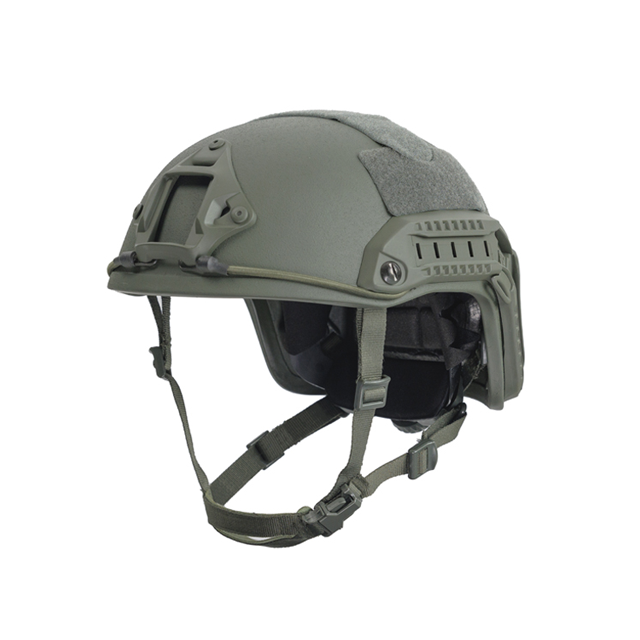
Rear hook-and-loop panels commonly hold counterweight pouches, remote battery packs, spare batteries, visible markers, infrared strobes, and identification patches. Upper panels can secure helmet covers, cable retainers, lightweight markers, and small accessories that do not impose a heavy unsupported load. Hook-and-loop areas also make it easier to change covers, patches, and lightweight accessories between assignments.
A counterweight should balance a necessary front-mounted device rather than become an excuse to add more equipment. Battery packs may perform two functions by supplying power and adding rear mass, but they still need secondary retention if sudden movement could separate them from the panel. Heavy objects should not rely on hook-and-loop material alone when a strap, tether, or purpose-built pouch can provide extra security.
Helmet Area | Typical Accessories | Main Function | Important Check |
Front shroud | Night vision, camera, observation device | Low-light vision and recording | Shroud, arm, and device compatibility |
Side rails | Light, headset, hearing protection, visor | Illumination, communication, protection | Rail profile and accessory clearance |
Rear panel | Counterweight, battery pouch, strobe | Balance, power, identification | Retention strength and rear clearance |
Upper panels | Cover, patches, cable retainers | Camouflage and organization | Adhesion and snag resistance |
A complete-looking helmet is not necessarily an effective helmet. Every additional device increases weight, creates another possible snag point, and competes for limited mounting space. The better approach is to define the task first and then select the smallest accessory package that supports it.
A low-light Custom FAST Helmet normally begins with a stable front shroud, a compatible mounting arm, and the required night observation device. When the device uses a remote power supply, the battery pack should sit securely at the rear with wiring routed close to the shell. A counterweight may be added after the suspension and retention system have been adjusted, but only enough weight should be used to restore a neutral position.
A compact white or infrared light can support navigation, equipment checks, signaling, or close-range tasks. Its position should allow easy operation without placing the beam directly against the helmet, visor, or another reflective surface. Identification markers may be appropriate for coordinated team use, although their visibility, placement, and operating mode must match the actual environment.
A camera is optional. It adds value when footage is needed for training, documentation, inspection, or review, yet it provides little benefit when no one will use the recording. Removing that unnecessary device can free rail space and reduce the load placed on the wearer’s neck.
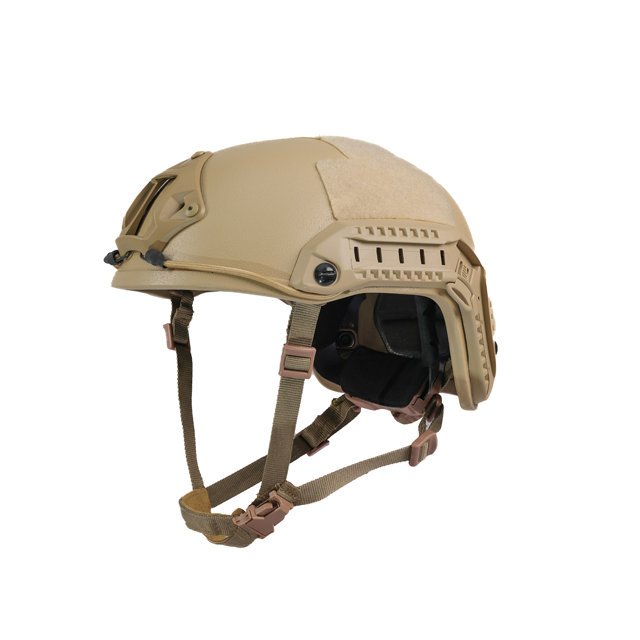
For team communication, the main priorities are hearing protection, a properly positioned headset, a reachable microphone, and controlled cable routing. The high-cut profile offers more space around the ears, but the rail adapter, ear cup, chinstrap, and internal pads must still function together. This additional clearance makes high-cut FAST helmets suitable for configurations that integrate communication and hearing-protection equipment.
Patrol and inspection users may benefit more from a white task light, eye protection, visible identification, and a compact camera than from night vision equipment. Training configurations should focus on hearing protection, stable fit, and accessories that contribute directly to instruction or review. Separate modular packages are usually more practical than keeping every device permanently installed.
Use Case | Priority Accessories | Optional Additions | Usually Unnecessary |
Low-light operations | Night vision, mount, power, balance system | IR light, identification marker | Multiple cameras or oversized pouches |
Team communication | Headset, hearing protection, microphone | Task light, strobe | Heavy front equipment without a defined purpose |
Patrol or inspection | White light, eye protection, ID marker | Camera, helmet cover | Large battery or counterweight |
Training and review | Camera, hearing protection, eye protection | Light, visible patch | Full operational loadout |
Begin by identifying the exact front-shroud pattern and side-rail design on the Custom FAST Helmet. Determine whether each accessory attaches directly or requires an adapter, mounting arm, bracket, clip, or replacement hardware. Screw length, clamp pressure, locking direction, and installation orientation should all be confirmed before the equipment is fitted.
Dimensional drawings are especially useful when helmets and accessories are being sourced in volume. A production sample provides even stronger evidence because the actual light, headset, visor, or camera can be mounted and tested. Front and side mounting interfaces should be specified alongside the shell, suspension, size, and other helmet requirements.
Small differences can create substantial operational problems. A clamp that appears secure may move during repeated head rotation, while an incorrectly sized screw may fail to seat properly or extend farther than intended. Tethers can protect expensive front-mounted devices, but they should supplement a stable mount rather than compensate for poor mechanical fit.
Drilling, cutting, heating, sanding, or reshaping a ballistic shell can alter a design that was tested as a complete protective system. Openings, projections, hardware placement, workmanship, penetration resistance, and impact attenuation can all be affected by structural changes. Permanent modifications should therefore not be treated as ordinary accessory installation.
Unverified screws and improvised fasteners should also be avoided. Hardware that is too long may create an interior contact point, while poorly seated parts can damage the mounting area or loosen during use. When permanent modification appears necessary, the helmet manufacturer should confirm the approved method and whether the change affects testing claims, inspection requirements, or warranty coverage.
Night vision devices, cameras, and forward-mounted lights pull the shell toward the face. Common warning signs include a helmet that tilts forward, excessive chinstrap pressure, repeated backward adjustment, loss of device alignment, and early neck fatigue. Adding a large rear counterweight without addressing the underlying fit can increase total strain rather than solve it.
First adjust the internal pads, suspension, chinstrap, and helmet position. Once the shell sits correctly, add only enough rear mass to balance the essential front equipment. A counterweight should sit high and close to the rear shell so that it corrects forward pull without encouraging the helmet to tip backward.
Shell material also affects the starting weight of the completed system. FAST helmet configurations are commonly available in aramid and polyethylene-based materials, and individual shell weights vary by material, size, and protection design. A lighter shell may create more usable weight capacity, but it does not remove the need to assess the finished Custom FAST Helmet with every accessory installed.
The final test should reproduce the movements and operating conditions the helmet will encounter. A static fit check cannot reveal every collision between accessories, cables, protective equipment, and the wearer’s body. Perform the inspection again whenever a device, pad, adapter, or mounting position changes.
● Confirm that the helmet sits level before and after the accessories are installed.
● Walk, crouch, turn, look upward, and shake the head to check stability.
● Test every hinge, release, switch, microphone, and adjustment control.
● Raise and lower goggles, night vision devices, visors, or face shields.
● Check that hearing-protection seals remain even around both ears.
● Shoulder relevant equipment and sit in the intended vehicle or work position.
● Inspect shroud hardware, rail clamps, cable retainers, and hook-and-loop attachments after use.
FAST helmet accessories are most effective when they match the mounting interface, operating task, and overall weight of the finished setup. Night vision devices, lights, communication headsets, cameras, visors, battery packs, and counterweights should work together without restricting movement, disrupting balance, or creating cable hazards.
Shenzhen Loop Circle Technology Co.,Ltd provides Custom FAST Helmet options that allow buyers to coordinate shell size, rails, front shrouds, suspension systems, colors, and accessory requirements. Planning these elements as one configuration helps reduce compatibility problems and creates a more comfortable, practical helmet for training, patrol, and mission-specific use.
A: Common options include night vision devices, helmet lights, cameras, communication headsets, hearing protection, visors, counterweights, battery packs, strobes, covers, and identification patches.
A: No. Rail profiles, front shrouds, adapters, screw patterns, and clamp dimensions can vary. Check the helmet and accessory specifications before installation.
A: A counterweight is useful when front-mounted night vision or cameras pull the helmet forward. It should restore balance without adding more weight than necessary.
A: Many headsets can connect to side rails using compatible adapters. The ear cups, chinstrap, padding, microphone, and cables should be tested together.
A: Mount only equipment required for the task, balance front and rear weight, secure loose cables, and complete a movement test before operational use.


