
Views: 0 Author: Site Editor Publish Time: 2026-01-15 Origin: Site


You may have noticed that whether for law enforcement, security, special forces or many outdoor workers, tactical boots often include a steel toe cap. This isn’t for looks — it’s a considered protective design: in complex and hazardous environments a steel toe protects toes and the forefoot from crushing, puncture and impact. This article explains why steel toe caps exist, from principles and tactical significance to common applications and how to choose the right model.
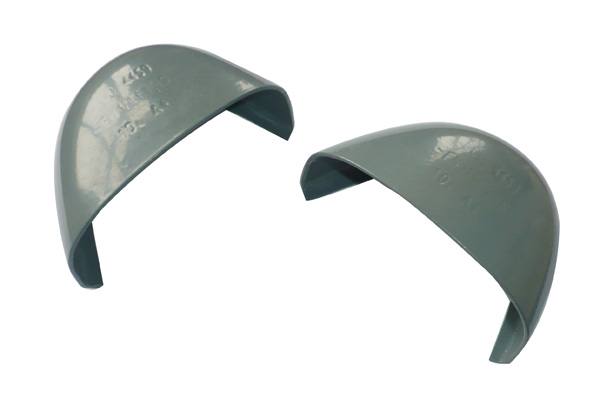
A steel toe cap is a metal shield embedded into the front of the boot that covers and protects the toe area and forefoot. It is usually wrapped under the upper material and works together with the sole, insole and midsole to resist direct forces.
The protection mechanism of a steel toe can be understood in three steps:
Direct load sharing and impact distribution: When a heavy object presses the forefoot, the rigid steel cap spreads the load over a larger area to prevent localized crushing of the toe bones.
Puncture and cut resistance to the forefoot: A sharp object striking the toe first contacts the steel cap; when properly designed, the cap helps prevent a sharp object from penetrating into the toes (note: this is different from midsole puncture protection).
Coupled energy management: The steel cap transmits force into the whole shoe. The midsole, insole and other cushioning components then absorb and dissipate residual impact energy, reducing instantaneous stress to bones and joints.
In short, the steel toe is the “first rigid barrier,” while the whole boot provides the “complete protection system.”
Preventing disabling or catastrophic foot injuries: crushed or severely injured toes can take a team member out of action; steel toe caps greatly reduce this risk.
Maintaining mobility and mission continuity: a foot injury can force mission abort or evacuation; steel toe caps help operators keep moving in critical minutes or hours.
Lowering medical and logistical burden: preventing frequent minor foot injuries reduces downtime and replacement needs.
Psychological effect: knowing the toes are protected increases confidence when operating in confined spaces, during breaching, climbing or debris-filled environments.
In urban close-quarters combat, entry, breaching, escort and emergency evacuations the risk to feet is high; a steel toe is a simple, effective life- and mission-preserving feature.
Urban law enforcement and SWAT/entry operations (doors, stairwells, falling debris, breaching tools);
Patrol and convoy security (crowd crush, dropped objects);
Special operations and patrol marches (loading/unloading, climbing, breaching);
Rescue, search and firefighting support (falling debris and blunt risks);
Construction, logistics and airport operations (heavy equipment, cargo drops);
Maritime and dock operations (winches, cargo slips and metal impacts).
Steel toe
Pros: high strength, durable, cost-effective, good resistance to crushing and forefoot puncture.
Cons: conducts heat and cold, triggers metal detectors, less friendly in metal-sensitive environments, slightly heavier.
Aluminum toe
Pros: good strength and rigidity while usually lighter than steel.
Cons: may require greater thickness for equivalent strength, can be more brittle under extreme deformation, and often costs more.
Composite toe (carbon fiber / plastic / fiber composites)
Pros: lighter, non-conductive, non-metallic (passes metal detectors more easily), good insulation properties.
Cons: usually bulkier, higher cost than steel, and in repeated or extreme multi-impact scenarios its long-term performance can be lower than steel.
Soft toe / no hard cap
Pros: comfortable and lightweight, suitable for low-risk tasks.
Cons: cannot reliably protect against high-compression or heavy-impact hazards.
Choosing is not about “steel is always best” — it’s about matching the task risks: weight, detectability, multi-impact durability, thermal conduction, insulating needs and budget.
Selection principle: align to task risk and balance protection with mobility.
Identify primary hazard types: heavy falling/impact → prefer steel or aluminum toe; frequent security checks or metal-sensitive environments → composite toe; prolonged marching with heavy loads → lighter composite or optimised steel designs.
Check protection standards and certifications: choose boots that meet relevant standards and request test certificates (standards vary by country).
Fit and load test: try on with operational socks and a loaded pack for 10–20 minutes to assess toe pressure and general comfort.
Consider midsole puncture protection: in environments with nails or shards, ensure the boot includes a puncture-resistant midsole.
Waterproofing, corrosion resistance and insulation: maritime tasks need corrosion-resistant hardware and drainage; electrical or cold environments may favour composite toes for insulation.
Weight vs agility: choose low-cut or lightweight models for agility; pick higher-cut, supportive boots for long patrols and load carriage.
Durability and maintainability: examine stitching, sole replaceability and hardware corrosion resistance.
Brand, batch and after-sales: for bulk procurement ask for samples, warranties and spare part availability (insoles, laces, zips).
Regularly inspect the toe for deformation, cracks or corrosion (for steel caps).
Avoid exposing damaged uppers that could allow sharp objects to hit the cap directly.
Treat rust promptly and apply protective coatings on metal parts if required.
Dry boots thoroughly after prolonged wet exposure and check internal liners.
Replace insoles and worn fastenings regularly to maintain proper fit and avoid pressure spots.
Steel toe caps are durable, but the boot’s overall protective performance depends on the whole shoe and its maintenance.
Q: Do steel toe caps make boots very heavy?
A: They add some weight, but modern steel cap designs and overall boot engineering minimise the impact. Composite toes are lighter alternatives, but steel often wins in cost-to-durability for heavy-impact scenarios.
Q: Do steel toes feel cold in winter?
A: Steel conducts cold; quality tactical boots include insulating liners or padding inside the toe to reduce thermal conduction. For extremely cold environments composite toes can reduce cold sensation.
Q: Can I pass through security with steel toe boots?
A: Steel toe boots will trigger metal detectors. If you frequently need to pass checkpoints, consider composite-toe models designed for reduced metal signature.
Tactical boots are often equipped with steel toe caps to provide enhanced toe protection in high-risk environments. Steel toes help resist heavy impacts, crushing forces, and penetration from sharp objects, significantly reducing the risk of foot injuries during combat, law enforcement, rescue, and other demanding operations. Although steel toe caps add weight and may sometimes be replaced by lighter composite materials, they remain a key feature of tactical boots when maximum protection is required.
If you are looking for high-quality Tactical boots, tactical accessories, Bulletproof Shield, ballistic plate, ballistic vest, or other ballistic helmet, contact us today. We provide professional-grade solutions, competitive pricing, and fast delivery to build a reliable tactical system for your needs.
Click here to view more Loop circle equipment


