
Views: 0 Author: Site Editor Publish Time: 2026-05-15 Origin: Site


Short Introduction
In modern tactical equipment systems, tactical belts are no longer just tools for “holding up pants,” but important platforms for carrying pistols, magazine pouches, flashlights, medical kits, utility bags, and other equipment. As mission requirements continue to increase, more and more users are paying attention to one key structure: the inner and outer belt system.
The so-called inner and outer belt system is not simply a two-layer belt, but a design that combines “inner belt fixation + outer belt load-bearing” to achieve better stability, load-carrying capacity, quick removal, and equipment organization.
For military, law enforcement, security, training, and high-mobility mission users, understanding the inner and outer belt structure in tactical belts not only helps with choosing the right products, but also improves equipment efficiency and overall tactical performance. This article systematically analyzes the functions, differences, application scenarios, and selection ideas of the inner and outer belt structure to help you better understand this design.
The inner and outer belt structure in tactical belts usually consists of two parts:
Inner Belt: Worn inside the pants or close to the body, mainly responsible for fixation and positioning
Outer Belt: Worn over the inner belt, mainly responsible for carrying equipment and providing support
The core purpose of this structure is to separate “fixation” from “load-bearing.”
The inner belt keeps the entire system firmly attached to the body, while the outer belt carries equipment and maintains structural stability.
Compared with ordinary single-layer belts, this structure is more suitable for tactical missions involving frequent equipment access, rapid movement, and long-term wear.
Tactical belts often need to carry a large amount of equipment, such as:
Pistol holsters
Magazine pouches
Flashlights
Utility bags
Medical kits
Communication devices
Without an inner and outer belt structure, the belt can easily shift, sag, or rotate under load.
With the combination of the inner and outer belt, the system can be secured more firmly, keeping equipment positions more stable.

Tactical missions require rapid response.
If the belt system is unstable, equipment positions may shift during movement, forcing the user to relocate and readjust equipment.
The inner and outer belt structure helps keep equipment in fixed positions, making it easier to build muscle memory and improve access efficiency.
Many tactical belt systems use hook-and-loop or quick-release structures. The inner belt can remain worn for long periods, while the outer belt can be quickly attached or removed depending on mission requirements.
This design is highly practical for patrol, training, gear changes, and security duty scenarios.
The outer belt carries the main equipment weight, while the inner belt provides stability and support.
This clearly divided structure can reduce concentrated pressure and improve wearing comfort.
Modern tactical equipment increasingly emphasizes modularity.
The inner and outer belt structure can more easily integrate with:
MOLLE systems
Holsters
Accessory pouches
Medical modules
Quick-release buckles
to form a more complete equipment platform.
Although the inner belt may look simple, it is the foundation of the entire system.
The inner belt is usually worn through the pants and connects with the outer belt using hook-and-loop panels, buckles, or webbing structures to prevent the outer belt from shifting during use.
The role of the inner belt is not to carry heavy equipment, but to provide a stable support base for the outer belt.
A good inner belt helps the entire tactical belt system fit closer to the body, reducing movement and friction.
If the material and width of the inner belt are properly designed, it can reduce waist pressure and make long-term wear more comfortable.
The outer belt is the main load-bearing part of the tactical belt system.
The outer belt is mainly used to mount various tactical accessories such as magazine pouches, holsters, medical kits, and utility bags.
The outer belt allows equipment to be distributed on both sides or front and rear positions according to mission requirements, making access paths more efficient.
Once equipment positions are fixed, users can access holsters, magazines, or tools more quickly during missions, reducing unnecessary movement.
High-quality outer belts usually feature a certain level of stiffness and support, making them less likely to collapse or deform even when carrying large amounts of equipment.

In practical applications, choosing a supplier that can provide professional sizing guidance and customization services is equally important to ensure that tactical gear performs as intended.
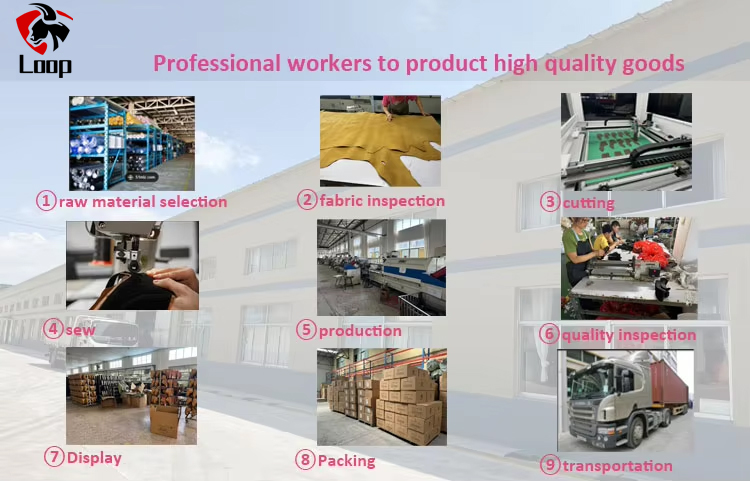
Compared to suppliers that only offer standardized products, we focus on real-world usage scenarios and mission requirements, providing precise sizing recommendations and system-based configuration solutions to achieve an optimal balance between protection, stability, and comfort.
By partnering with Loop, clients benefit from fast pre-production samples and customized based on samples, a stable and efficient rapid delivery system, competitive pricing advantages, and timely access to trending industry product insights—enhancing overall procurement efficiency and market competitiveness.
At the same time, through multi-dimensional customization and support for bulk procurement, we help clients reduce trial-and-error costs, minimize procurement risks, and ensure efficient compatibility among different types of equipment.
Ultimately, what clients receive is not just individual products, but a complete equipment solution that truly fits operational needs and enhances overall mission performance.
Click here to contact us for Tactical Gear customized services.
Single-layer belt: Simple structure, suitable for lightweight use, but limited in load-bearing and stability
Inner and outer belt: Dual-layer cooperation with stronger stability, more suitable for tactical equipment mounting
Single-layer belt: Suitable for daily wear or lightweight tools
Inner and outer belt: More suitable for multiple accessories and heavy-load missions
Single-layer belt: Less flexible for changing mission configurations
Inner and outer belt: Allows quick replacement of the outer belt, suitable for multi-mission scenarios
Single-layer belt: Simple and direct, but less stable under long-term load
Inner and outer belt: Better suited for tactical needs and offers a more professional overall experience
Single-layer belt: Limited expandability
Inner and outer belt: Better suited for MOLLE and modular accessory systems
If the inner and outer belts work together properly, equipment will not easily shake or shift.
This is especially important for running, crouching, climbing, and vehicle operations.
Once equipment positions are fixed, users can access holsters, magazines, or tools more quickly, improving mission response speed.
The inner and outer belt structure helps distribute weight more evenly, reducing pressure on the waist.
In patrol, training, security, and emergency response missions, the system can quickly adapt by changing the outer belt configuration.
If the structure is properly designed, force distribution will be more balanced, reducing deformation, wear, and loosening.

Law enforcement personnel usually need to carry multiple pieces of equipment and require quick access.
The inner and outer belt structure is more suitable for this type of high-frequency use.
Security personnel need both stability and comfort during patrol, escort, and guard duty, making the inner and outer belt system highly suitable.
Training scenarios often involve frequent wearing, removal, and configuration adjustments, where the inner and outer belt system offers advantages.
When carrying tools, medical kits, and communication devices, the modular inner and outer belt system becomes more practical.
In missions involving frequent running and large movements, the dual-layer structure reduces equipment shaking and improves stability.
If the belt is only for lightweight daily use, a single-layer belt may already be sufficient.
For law enforcement, security, training, or heavy-load missions, the inner and outer belt structure is more suitable.
Whether the outer belt has sufficient stiffness directly affects equipment stability after mounting.
Whether the inner belt is comfortable and securely fits the body will affect the stability of the entire system.
The reliability of the connection structure between the inner and outer belt is an important factor affecting user experience.
If you need to mount magazine pouches, holsters, medical kits, and other accessories, prioritize products with stronger compatibility.
For users who frequently switch missions, a quick-release structure is very important.

For buyers, the inner and outer belt structure is not just a design detail; it also affects:
Whether users can easily adapt to the system
Whether equipment remains stable
Whether it is suitable for mission switching
Whether unified configuration is convenient
Whether later expansion is easy
Especially for bulk procurement, institutional purchasing, and brand customers, products with a clear, stable, and expandable inner and outer belt structure often provide greater procurement value.
The inner and outer structure of a tactical belt is not better simply because it is more complex. The key is whether it truly matches mission requirements.
An excellent inner and outer belt system should achieve:
Stable fixation
Reliable load-bearing
Comfortable wear
Easy attachment and removal
Compatibility with modular accessories
A truly professional tactical belt is not just able to “carry equipment,” but can carry it securely, allow fast access, and adapt to different missions.
The inner and outer belt structure in tactical belts essentially separates “fixation” from “load-bearing,” making the belt system more stable, efficient, and suitable for tactical missions.
It not only improves the user experience, but also helps users complete tasks faster and more steadily in complex scenarios.
For buyers, understanding the value of the inner and outer belt structure helps in selecting more suitable products;
for manufacturers, providing more professional inner and outer belt systems also helps improve product competitiveness.
If you are looking for high-quality ballistic vest, ballistic helmet, ballistic plate, Bulletproof Shield, Combat Uniforms, or other tactical accessories, contact us today. We provide professional-grade solutions, competitive pricing, and fast delivery to build a reliable tactical system for your needs.
Click here to contact us for Tactical Gear customized services


