
Views: 0 Author: Site Editor Publish Time: 2025-12-29 Origin: Site


“The more gear the better” sounds intuitive, but in tactical and duty environments blindly piling on equipment often causes negative effects — extra weight, interference, slower access, and heavier logistics. By systematically integrating protective, load-bearing, communication, and functional equipment, tactical gear helps reduce physical strain, lower risk, and maintain reliable performance in dynamic conditions. The real goal is “fit-for-purpose, not maximal”: task-driven, risk-based, efficiency-focused allocation raises combat effectiveness and lowers long-term cost.
Below is a rapid checklist of major equipment categories with their typical roles and value points to help weigh “keep / buy / skip.”
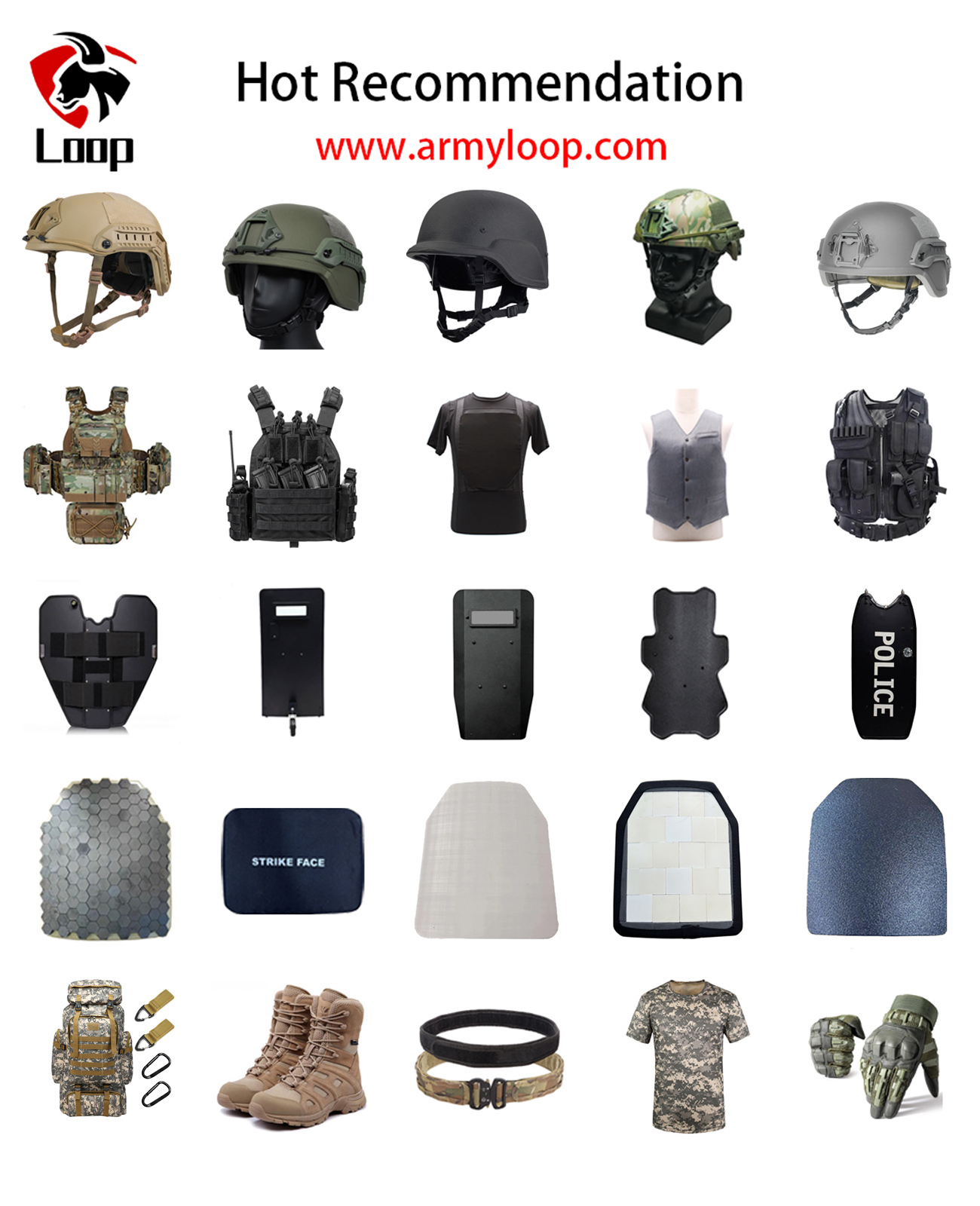
Tactical helmet: head protection + platform for NVG, comms, cameras. Value: life protection & accessory platform.
Ballistic vest / soft armor & plates: torso protection against different threats. Value: direct survivability gain.
Ballistic shield: mobile cover, entry protection. Value: team-level cover & psychological deterrent.
Tactical backpack: load carriage, modular mounting, logistics. Value: operational radius & endurance.
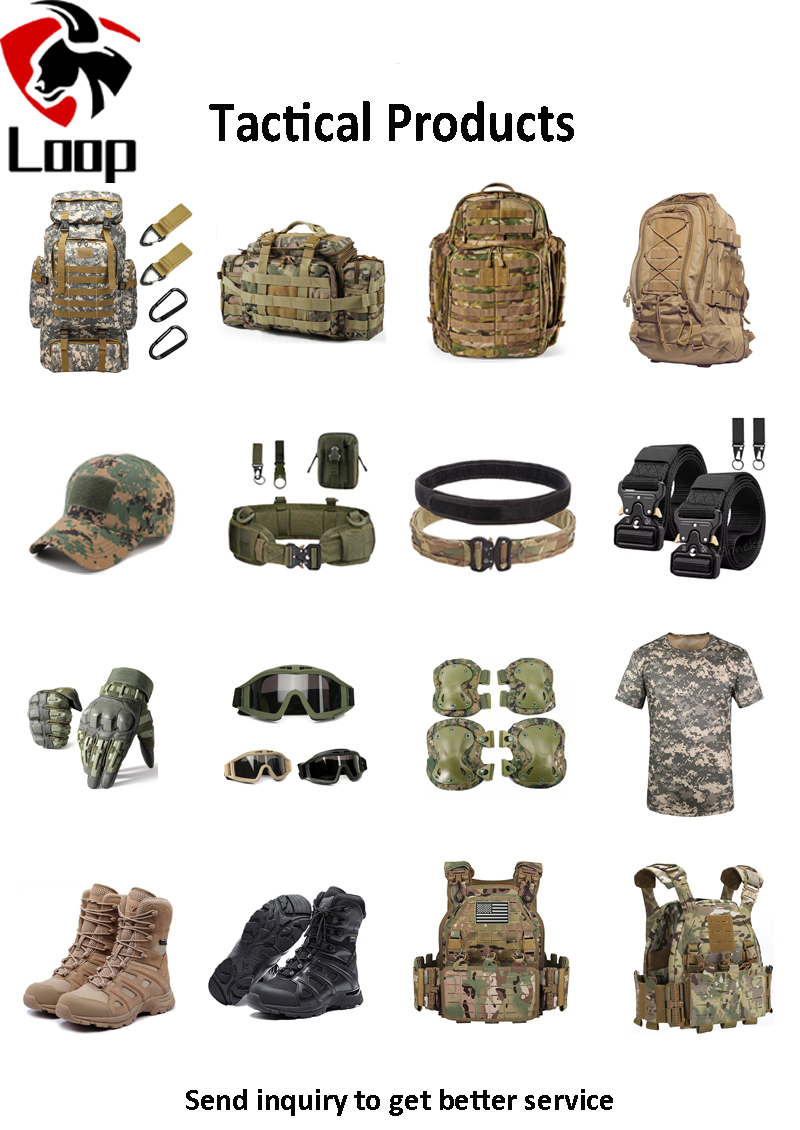
Tactical belt / chest rig / quick-draw holster: mount points, draw & reload efficiency. Value: shorten action chains.
Holsters / weapon cases: safe carry & fast access. Value: accident control & response time.
Goggles / face shields: eye/face protection vs chemicals, impact, fragments. Value: injury prevention & vision reliability.
Tactical boots: mobility, traction, ankle protection. Value: mobility & reduce non-combat attrition.
Gloves: cut resistance, impact protection, tactile preservation. Value: operational reliability & protection.
Comms / command devices: voice & data. Value: situational awareness & command & control.
Night vision / optics / lights: sensing & marking. Value: extend perception and tactical windows.
Medical kits / tourniquets: first aid. Value: increase survivability.
Ammunition / spare batteries / tools: sustainment. Value: mission continuity.
Redundancy & resilience: multiple sets and spares allow mission continuation if items fail or tasks change.
Broader mission coverage: diverse gear enables response across more scenario types (e.g., night ops and maritime).
Role specialization: distribute specialized kit by role to raise team capability.
Psychological & tactical deterrence: visible heavy kit (shields, heavy armor) can reduce opponent resistance.
Weight & mobility loss: excess kit directly increases physical load, slowing speed and agility and reducing reaction capability.
Action-chain complexity: more mounted items increase interference (blocking, snagging), lengthening response time.
Logistics & maintenance burden: more item types require more spare parts, inspections and repair budget.
Training costs: proficiency across many items requires more training time and expense.
Poor equipment choices become liabilities: incompatible or heavy accessories can be negative assets in the field.
Regulatory / compliance risks: some items are restricted in civil contexts; improper kit may cause legal issues.
Core conclusion: every procurement or loadout decision should answer three questions:
Does this item directly reduce a key risk (life-or-death or mission-failure probability)?
Does it improve the efficiency of a critical action (draw, treat casualty, aim) or replace a better existing solution?
Can its training/maintenance/logistics cost be justified by the operational benefit?
If at least two answers are “yes,” prioritize procurement; otherwise invest in higher-value items.
Define mission set & threat matrix: list routine tasks, extreme cases and worst-case threats (small arms, explosives, CBRN, maritime).
Tier equipment (core / required / optional): label items as life-critical, performance-enhancing, or mission-specific/optional.
Prioritize compatibility: select items compatible with existing platforms (plate carriers, belts) to minimize clashes.
Favor modular & lightweight solutions: fit mission modules only when needed; keep baseline load minimal.
Optimize by action chains: test whether added gear affects draw, reload, casualty care or other critical sequences.
Maintain minimum spares + parts pool: keep consumables (ammo, batteries, tourniquets) and commonly-failed parts (buckles, zips) in rotation.
Train before you buy more: validate capability gaps through training using current kit before broad procurement.
Evaluate total lifecycle cost: include purchase, maintenance, replacement and training when deciding.
Must-have: patrol boots, flashlight, radio, basic PPE.
Should-have: cut-resistant gloves, light soft armor (as needed).
Optional: high-end NVG, heavy shield (uncommon).
Must-have: modular helmet, mission-configurable ballistic helmet mounts, plate carrier, breaching kit, tactical gloves.
Should-have: NVG, low-profile visor, quick-draw holster.
Optional: large-capacity rucksack (depends on depth), wheeled shield (rare).
Embed these matrices as “task-fit recommendations” on product pages and include a “request sample / bulk quote” CTA to improve procurement conversion.
Consumables pool: ammo, batteries, tourniquets, zipper/spare parts. Set minimum thresholds (e.g., 2–4 weeks of supply).
Rotation procedures: implement wear→wash→spare cycles for consumables (mag pouches, T-shirts, gloves).
Batch & lot control: purchase same items in same batch to reduce size/compatibility variance.
Retirement & testing: set mandatory retirement or third-party inspection for struck helmets/shields.
Q: Will an extra holster or extra gloves really save a life?
A: It depends on task fit. In specific threats (cold, chemical, breaching), specialized gloves or holsters can prevent failure; in routine patrol, basic kit may suffice.
Q: Why do my team members feel slowed by extra gear?
A: Common causes are poor layout, lack of action-chain training, or incompatibility with base platforms. Reduce weight, streamline mounts and retrain the team.
Q: What should we prioritize purchasing?
A: Secure life-line items first (helmet, vest, med kit, comms), then address “should-have” items based on mission frequency and risk.
Tactical equipment refers to a professional gear system designed for complex, high-pressure environments, with the primary goal of enhancing protection, operational efficiency, and mission adaptability. Tactical effectiveness is not “more gear” but “the right gear.” Proper selection and configuration of tactical equipment allow users to achieve an effective balance between safety, mobility, and practicality, significantly improving overall operational outcomes.
If you are looking for high-quality ballistic helmet, Bulletproof Shield, ballistic plate, ballistic vest, or other tactical accessories, contact us today. We provide professional-grade solutions, competitive pricing, and fast delivery to build a reliable tactical system for your needs.


