
Views: 0 Author: Site Editor Publish Time: 2026-07-29 Origin: Site


Introduction
In the past, the primary goal of tactical clothing was to provide durability, abrasion resistance, and long service life in high-intensity environments.
Whether used by military personnel, law enforcement units, or professional outdoor users, early tactical clothing mainly focused on:
Whether the fabric was strong enough
Whether the service life was long enough
Whether it could withstand harsh environments
However, with the continuous changes in modern military operations, law enforcement missions, outdoor activities, and professional application scenarios, tactical clothing that only focuses on durability can no longer fully meet current requirements.
Today, next-generation tactical clothing is developing from traditional “durable products” into more professional “functional equipment”.
Modern tactical clothing not only needs to provide basic protection but also requires:
Better breathability
Greater freedom of movement
Stronger environmental adaptability
Improved ergonomic design
More professional mission functions
This transformation is driving the tactical clothing industry toward lightweight, modular, and multifunctional development.
So why is tactical clothing evolving from durability to functionality?
What types of modern tactical clothing are available?
What are the differences between different tactical clothing products?
How should buyers choose the right tactical clothing?
This article provides a detailed analysis of tactical clothing development trends, functional features, application scenarios, and selection methods.
Long Sleeves Outdoors Tactical Camouflage Combat Uniform

Traditional tactical clothing was mainly used for:
Regular military training
Basic outdoor activities
Standard law enforcement missions
At that time, users mainly focused on:
"Is the clothing strong enough?"
Therefore, heavy-duty and highly abrasion-resistant materials became the primary choice.
However, modern mission environments are becoming more complex, including:
Urban operational environments
Mountain areas
Desert regions
Tropical environments
Long-duration patrol missions
High-intensity outdoor operations
Users now require tactical clothing that not only lasts longer but also provides:
Rapid movement capability
Temperature regulation
Long-term wearing comfort
Therefore, tactical clothing is shifting toward functionality.
Customized Cotton Polyester Blend Round Neck Loose T Shirts

Modern users need to wear equipment for extended periods.
If clothing is:
Too heavy
Poorly ventilated
Restrictive to movement
It can affect:
Movement speed
Mission efficiency
Physical comfort
Therefore, next-generation tactical clothing focuses more on:
Ergonomic design
Stretch zones
Ventilation structures
Lightweight materials
Making clothing an important part of improving operational capability.
Modern tactical personnel usually carry:
Tactical vests
Armor plates
Tactical belts
Tactical backpacks
Communication equipment
Medical equipment
Therefore, tactical clothing needs to integrate with other equipment systems.
For example:
Cuffs need to work with tactical gloves
Shoulders need to support equipment attachment
Pockets need to meet mission requirements
Fabric needs to reduce equipment friction
Tactical clothing is no longer just ordinary clothing but an important component of a complete tactical equipment system.
Combat uniforms are one of the most traditional types of tactical clothing.
Soft Exterior Waterproof Camouflage Assault Clothing

They are mainly used for:
Military operations
Tactical training
Outdoor missions
Features:
High abrasion resistance
Multiple functional pockets
Equipment carrying capability
Suitable for complex environments
Common designs include:
Reinforced elbows
Reinforced knees
Hook and loop areas
MOLLE attachment interfaces
Advantages:
Able to meet high-intensity mission requirements.
Limitations:
Some traditional designs are heavier and have limited breathability.
Combat shirts are one of the most popular functional tactical clothing products in recent years.
Multi Camouflage Tactical Training Long Sleeved T Shirt

Features:
The body section usually uses:
Moisture-wicking fabrics
Stretch materials
Sleeve sections usually use:
Abrasion-resistant materials
Advantages:
Lighter weight
Better breathability
Greater mobility
Applications:
Special operations
Law enforcement missions
Long-duration wearing environments
Compared with traditional combat uniforms, combat shirts better meet modern high-mobility requirements.
Tactical pants are an important part of tactical clothing systems.
Outdoors Military War Game Wear Resistant Combat Trousers

Main features include:
Multiple functional pockets
Reinforced knee design
Stretch movement zones
Abrasion-resistant fabrics
Applications:
Military and police missions
Outdoor activities
Security operations
Modern tactical pants increasingly emphasize:
Comfort
Flexibility
Long-term wearing experience
Woven Fabric Men's Polyester Fleece Jacket For Winter

Tactical jackets are mainly designed for:
Cold environments
Rainy and snowy weather
Outdoor operations
Functions include:
Wind resistance
Water resistance
Insulation
Quick adjustment
Modern tactical jackets usually use:
Waterproof breathable membranes
Multi-layer structures
Lightweight insulation materials
Improving adaptability in complex weather environments.
Flame Resistant Desert Combat Uniform T-Shirts

Base layer clothing mainly provides:
Moisture management
Temperature control
Improved comfort
Common materials include:
Polyester
Merino wool
Blended fabrics
Suitable for:
Long-duration missions
High-intensity activities
Main materials include:
Heavy cotton fabrics
High-density nylon
Reinforced canvas
Features:
High strength
Long service life
However:
Higher weight
Average breathability
Uses:
Ripstop fabrics
CORDURA nylon
Stretch fibers
Quick-drying materials
Features:
Lighter weight
More flexible
Better suited for dynamic missions
New Summer Camouflage Frog Cloth Tights Cp Short Sleeved T Shirt Frog Short Dress Top

Traditional tactical clothing focuses on:
"Ensuring the clothing does not fail."
Functional tactical clothing focuses on:
"Helping users complete missions more effectively."
Therefore, it includes:
Ergonomic cutting
Ventilation systems
Quick adjustment structures
Equipment compatibility designs
Durability-focused clothing:
Strong and reliable
Easy maintenance
Function-focused clothing:
More comfortable
Greater freedom of movement
Better environmental adaptability
Ripstop fabrics improve tear resistance through special weaving structures.
Advantages:
Prevents damage from spreading
Extends clothing lifespan
CORDURA is a high-performance nylon material.
Features:
High abrasion resistance
Tear resistance
Lightweight performance
Widely used in:
Tactical clothing
Tactical backpacks
Equipment accessories
Loop Camouflaged Jacket And Pant Military Uniforms

Modern tactical clothing adds stretch areas such as:
Waist areas
Knees
Elbows
Advantages:
Improves:
Crouching ability
Climbing ability
Rapid movement capability
Modern environments require clothing to provide both:
Rain protection
Moisture management
Technologies include:
Waterproof coatings
Breathable membranes
Water-repellent treatments
Some tactical clothing adds:
Hook and loop areas
Equipment attachment points
Detachable structures
Providing convenience for:
Identification
Equipment attachment
Mission adjustment
Including:
Army units
Special forces
Rapid response units
Requirements:
High mobility
High durability
All-weather adaptability
Applications include:
Patrol missions
SWAT operations
Security tasks
Focus on:
Comfort
Flexibility
Equipment compatibility
Outdoor Camouflage Tactical Training Suits

Including:
Outdoor exploration
Mountaineering
Field operations
Requirements:
Protection
Comfort
Environmental adaptability
Examples:
Private security
Personnel working in high-risk areas
Needs:
Professional appearance
High reliability
Long-duration wearing capability
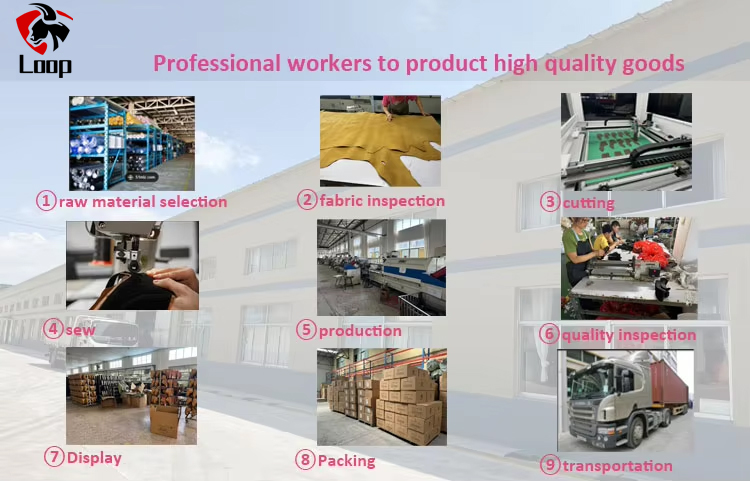
In practical applications, choosing a supplier that can provide professional sizing guidance and customization services is equally important to ensure that tactical gear performs as intended.
Compared to suppliers that only offer standardized products, we focus on real-world usage scenarios and mission requirements, providing precise sizing recommendations and system-based configuration solutions to achieve an optimal balance between protection, stability, and comfort.
By partnering with Loop, clients benefit from fast pre-production samples and customized based on samples, a stable and efficient rapid delivery system, competitive pricing advantages, and timely access to trending industry product insights—enhancing overall procurement efficiency and market competitiveness.
At the same time, through multi-dimensional customization and support for bulk procurement, we help clients reduce trial-and-error costs, minimize procurement risks, and ensure efficient compatibility among different types of equipment.
Ultimately, what clients receive is not just individual products, but a complete equipment solution that truly fits operational needs and enhances overall mission performance.
Click here to contact us for Tactical Gear customized services.
Hot environments:
Lightweight breathable fabrics
Quick-drying designs
Cold environments:
Insulation layers
Windproof and waterproof functions
High-intensity missions:
Reinforced structures
Abrasion-resistant materials
High-mobility missions:
Stretch designs
Lightweight structures
Military Combat MultiCamo Round Neck T Shirt

Important factors include:
Abrasion resistance
Tear resistance
Breathability
Quick-drying capability
High-quality tactical clothing should:
Allow unrestricted movement
Remain comfortable during long use
Work with tactical equipment
Professional tactical clothing manufacturers usually provide:
Fabric development capability
OEM/ODM customization
Mass production capability
International export experience
For buyers, stable supply capability and product consistency are equally important.
Future tactical clothing will reduce:
Unnecessary weight
Complex structures
While improving:
Protection capability
Wearing comfort
Future technologies may include:
Temperature-regulating materials
Smart textile technology
Sensor integration
Providing more advanced personal protection.
Different missions may have specialized clothing such as:
Desert tactical clothing
Cold-weather tactical clothing
Urban operation clothing
Special mission clothing
Meeting different application requirements.
The development of tactical clothing has moved from simply pursuing “durability” into a new era focused on “functionality”.
Modern tactical clothing not only requires:
Strength and abrasion resistance
but also requires:
Lightweight design
Comfort
Flexibility
Environmental adaptability
Equipment compatibility
From combat uniforms and tactical shirts to tactical pants and functional jackets, next-generation tactical clothing is becoming an important tool for improving mission efficiency.
For buyers, when selecting tactical clothing, they should consider:
Operating environment
Fabric performance
Functional design
Product quality
Supplier manufacturing capability
Choosing a professional and reliable tactical equipment manufacturer can provide tactical clothing solutions that better meet real mission requirements.
If you are looking for high-quality ballistic vest, ballistic helmet, ballistic plate, Bulletproof Shield, Combat Uniforms, or other tactical accessories, contact us today. We provide professional-grade solutions, competitive pricing, and fast delivery to build a reliable tactical system for your needs.
Click here to contact us for Tactical Gear customized services


