
Views: 0 Author: Site Editor Publish Time: 2026-07-22 Origin: Site


Introduction
In recent years, with changes in the global security environment, increasing complexity of military missions, and rising demands for law enforcement operations, military and police equipment has undergone significant upgrades. Among them, lightweight design has become one of the core trends in modern tactical equipment development.
In the past, military and police personnel usually relied on heavier equipment to obtain higher protection levels. However, with longer mission durations, higher mobility requirements, and increased equipment-carrying needs, traditional equipment has gradually shown limitations, including:
Excessive weight
Fatigue during long-term wearing
Reduced mobility
Lower operational efficiency
Therefore, military forces, law enforcement agencies, and professional equipment manufacturers worldwide are continuously promoting lightweight equipment development. Through advanced materials, modular designs, and ergonomic optimization, modern equipment achieves:
Lighter weight
Higher protection
Improved mobility
Better mission adaptability
Lightweight tactical equipment has been widely used in:
Military operations
Special operations
Police enforcement
Border patrol
Security missions
Emergency rescue operations
This article will analyze the types, characteristics, application value, development trends, and selection methods of lightweight tactical equipment, helping buyers, brands, and professional users better understand the future direction of tactical equipment.
Modern military and law enforcement missions are no longer limited to fixed-position operations but increasingly involve:

Urban operations
Rapid deployment missions
Long-duration patrols
Special environment operations
Multi-purpose missions
In these situations, equipment weight directly affects:
Movement speed
Physical consumption
Reaction ability
Continuous operational capability
Therefore, reducing equipment weight has become an important method for improving mission efficiency.
Traditional protection concepts usually follow:
Increasing material thickness → Improving protection capability
However, this approach results in:
Increased equipment weight
Reduced wearing comfort
Limited movement
Modern protective equipment focuses more on improving protection efficiency through advanced materials.
For example:
Traditional steel protective equipment:
Higher weight.
Modern UHMWPE and Kevlar composite materials:
Provide similar or improved protection while reducing weight.
Military and police personnel may need to wear equipment continuously for several hours or even longer.
Examples include:
Patrol missions
Tactical deployment
Special operations
Security missions
Excessive equipment weight can cause:
Shoulder pressure
Neck fatigue
Back and waist burden
Reduced operational efficiency
Therefore, comfort has become an important factor in modern equipment design.
Lightweight tactical equipment does not simply mean reducing materials. Instead, it reduces overall weight while maintaining:
Protection performance
Service life
Functional capability
Through:
Advanced materials
Structural optimization
Modular design
Ergonomic engineering
Common lightweight tactical equipment includes:
Lightweight ballistic helmets
Lightweight body armor
Lightweight armor plates
Lightweight tactical vests
Lightweight tactical backpacks
Lightweight tactical boots
Lightweight equipment accessories
Ballistic helmets are an important component of personal protective equipment.
Traditional helmets:
Steel helmets
Heavy composite helmets
Although they provide good protection, long-term wearing can easily cause fatigue.
Modern lightweight helmets mainly use:
UHMWPE (Ultra High Molecular Weight Polyethylene)
PE materials
Kevlar aramid fibers
Composite fiber materials
Professional Protection High Cut Fast Tactical Ballistic Helmet

Reduces neck pressure and improves comfort during extended use.
Suitable for:
Special operations
Rapid response missions
Urban operations
Modern tactical helmets usually support:
Night vision mounts
Tactical rails
Communication devices
Helmet lights
Traditional body armor usually has considerable weight.
With material development, modern protective equipment uses:
UHMWPE armor plates
Lightweight ceramic plates
Kevlar soft armor materials
to reduce overall weight.
Lightest Military Vest Black Tactical Molle Rapid Ballistic Vest

Reduces pressure on shoulders and waist.
Suitable for:
Patrol missions
Urban law enforcement
Rapid deployment operations
Including:
Quick release systems
MOLLE expansion systems
Plate carrier designs
Armor plates are one of the key factors affecting protective equipment weight.
Advantages:
Lower cost
High strength
Disadvantage:
Higher weight
NIJ III Lightweight Spray Polyurea Coating Ballistic Plate

Main types include:
Features:
Ultra lightweight
High strength
Corrosion resistance
Applications:
Military equipment
Police equipment
Tactical missions
Features:
High protection level
Lower weight compared with steel plates
Common materials:
Alumina ceramic
Boron carbide ceramic
Tactical backpacks need to carry:
Ammunition
Medical equipment
Communication equipment
Survival gear
If the backpack itself is too heavy, it increases the user's burden.
Modern lightweight backpacks use:
Nylon materials
Cordura fabric
Lightweight frame structures
Loop Tactical Backpack Camouflage Outdoors Dragon Egg Bag

Reduced carrying burden
Improved movement efficiency
Enhanced durability
Applications:
Military operations
Outdoor missions
Security patrols
Tactical boots directly influence operational efficiency.
Loop Lightweight Breathable & Quick Drying Military Boots Wholesale

Modern tactical boots reduce weight through:
Lightweight soles
Waterproof materials
Breathable designs
Composite protection structures
Advantages:
Reduced foot fatigue
Improved movement speed
Enhanced all-weather adaptability
UHMWPE is one of the most important materials in lightweight protective equipment.
What Is Ultra-Light Ballistic Material Polyethylene?

Advantages:
Low density
High strength
Lightweight
Applications:
Ballistic helmets
Armor plates
Body armor
Kevlar is a classic protective material.
Kevlar: The Unbreakable Thread - From Discovery To Essential Gear

Advantages:
High strength
Excellent energy absorption
Mature technology
Applications:
Body armor
Helmets
Protective layers

Features:
High strength
Light weight
High rigidity
Applications:
High-end tactical equipment
Structural reinforcement components
Boron Carbide Ballistic Ceramic (B₄C)

Examples:
Boron carbide
Silicon carbide
Advantages:
High hardness
High protection capability
Applications:
NIJ III armor plates
NIJ IV armor plates
Comparison | Traditional Equipment | Lightweight Equipment |
|---|---|---|
Weight | Higher | Lower |
Materials | Steel and conventional composites | UHMWPE and advanced composites |
Comfort | Higher pressure during long-term use | More suitable for extended missions |
Mobility | Relatively limited | More flexible |
Applications | General protection missions | High-intensity missions |
Cost | Lower | Usually higher |
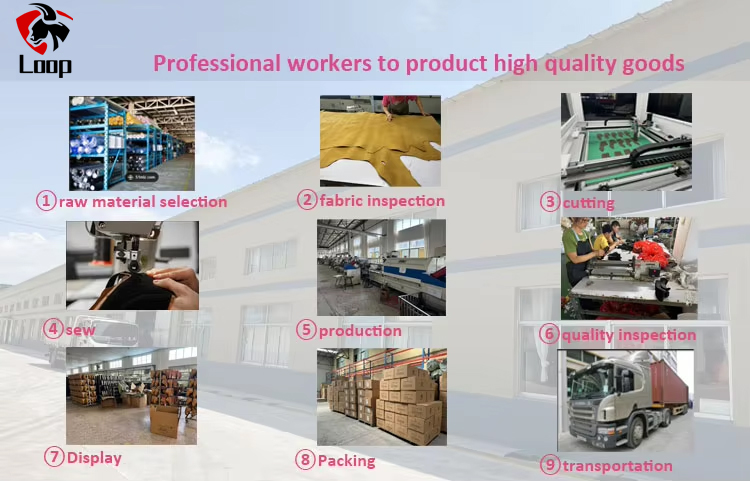
In practical applications, choosing a supplier that can provide professional sizing guidance and customization services is equally important to ensure that tactical gear performs as intended.
Compared to suppliers that only offer standardized products, we focus on real-world usage scenarios and mission requirements, providing precise sizing recommendations and system-based configuration solutions to achieve an optimal balance between protection, stability, and comfort.
By partnering with Loop, clients benefit from fast pre-production samples and customized based on samples, a stable and efficient rapid delivery system, competitive pricing advantages, and timely access to trending industry product insights—enhancing overall procurement efficiency and market competitiveness.
At the same time, through multi-dimensional customization and support for bulk procurement, we help clients reduce trial-and-error costs, minimize procurement risks, and ensure efficient compatibility among different types of equipment.
Ultimately, what clients receive is not just individual products, but a complete equipment solution that truly fits operational needs and enhances overall mission performance.
Click here to contact us for Tactical Gear customized services.
Reduced weight provides:
Faster movement
Better reaction capability
Lower physical consumption
Lightweight equipment helps personnel:
Extend operation time
Reduce fatigue
Improve execution efficiency
Suitable for:
Urban environments
Mountain environments
Desert environments
Long-distance patrols
Lightweight development represents:
Material upgrades
Design improvements
Manufacturing technology advancement
Lightweight design must be based on:
Protection capability
Product quality
Service life
When purchasing protective equipment, pay attention to:
NIJ standards
Do You Know about The NIJ Bulletproof Rating?

NATO standards
STANAG standards
and third-party testing reports.
For high-intensity missions:
High-level armor plates
Composite helmets
For long-duration patrols:
Lightweight vests
UHMWPE equipment
Modern equipment increasingly emphasizes:
MOLLE systems
Quick-release structures
Accessory compatibility
Future materials may include:
Nanomaterials
Graphene-enhanced materials
“Next-Gen” Ballistic Material: Graphene

Smart composite materials
Further reducing weight.
Future equipment may integrate:
Protection
Communication
Sensing
Data collection
Users may customize equipment according to:
Body size
Mission type
Environmental requirements
Global military and police equipment is moving toward lightweight design. This is not only the result of material technology development but also reflects the changing requirements of modern missions.
From lightweight ballistic helmets and UHMWPE armor plates to modular tactical vests and lightweight tactical backpacks, the new generation of tactical equipment helps military and police personnel achieve:
Better protection capability
Higher operational efficiency
Stronger mission adaptability
In the future, lightweight design will continue to be one of the core directions in protective equipment development.
For buyers, military organizations, security companies, and tactical equipment brands, choosing a professional manufacturer with advanced material capabilities, stable production capacity, and extensive export experience will help obtain more reliable and efficient equipment solutions.
If you are looking for high-quality ballistic vest, ballistic helmet, ballistic plate, Bulletproof Shield, Combat Uniforms, or other tactical accessories, contact us today. We provide professional-grade solutions, competitive pricing, and fast delivery to build a reliable tactical system for your needs.
Click here to contact us for Tactical Gear customized services


