
Views: 0 Author: Site Editor Publish Time: 2026-06-03 Origin: Site


Introduction
From a market perspective, both law enforcement clothing and military personal protective equipment are continuing to grow around 2026: the global law enforcement and military clothing market is expected to grow from US$2.3624 billion in 2025 to US$2.5152 billion in 2026, with a CAGR of about 5.9% from 2026 to 2033; the military personal protective equipment market is expected to grow from US$17.3117 billion in 2025 to US$18.5470 billion in 2026, with a CAGR of about 7.1% from 2026 to 2033. Behind this growth, the core drivers are global modernization upgrades, equipment renewal, and the continued demand for safer, more comfortable, and more functional clothing. Source
Against this backdrop, the demand for tactical T-shirts has increased significantly in 2026. They are no longer just “military-style fashion” or “outdoor apparel,” but are gradually becoming a practical type of clothing that balances comfort, functionality, professionalism, and mission adaptability. For military, law enforcement, security, training, outdoor, and high-mobility users, tactical T-shirts have become an increasingly important type of base-layer clothing. Source
Military, law enforcement, and security systems increasingly emphasize equipment upgrades. It is not only protective equipment that is evolving; base-layer clothing is also advancing. Market growth shows that buyers care more about the overall wearing experience of a mission kit rather than just a single outer garment or protective item. The growth of the tactical clothing market is closely aligned with the demand to “improve operational efficiency, enhance comfort, and adapt to different environments.” Source
Mainstream tactical tops usually emphasize moisture-wicking, quick-drying, abrasion resistance, comfort, and ease of movement. For example, official product pages mention that tactical tops often use moisture-wicking, quick-drying, breathable fabric, and maximum-movement designs; some combat shirts also emphasize being worn under body armor, with a collar that works better with straps and equipment. Source
The growing demand for tactical T-shirts is also linked to hot-weather environments, long patrols, training, and guard duty. Official product information shows that many tactical tops include moisture-wicking, quick-drying, anti-odor, breathable, and greater freedom-of-movement features, which are exactly what high-frequency use scenarios need most. Source
In the past, many customers only looked at color and basic style. Now they care more about whether the shirt is comfortable to wear, whether it gets sweaty easily, whether it can be worn under body armor, whether it is durable after washing, and whether it is suitable for team-wide procurement. Functional tactical T-shirts perfectly meet this procurement logic shift from “basic clothing” to “mission gear.” Source

A tactical T-shirt usually refers to a functional top designed for military, law enforcement, security, training, outdoor, and high-mobility missions. The biggest difference between it and a regular T-shirt is not just style, but the different logic behind its use: ordinary T-shirts are for everyday wear, while tactical T-shirts are mission-oriented. Mainstream tactical tops usually focus more on moisture-wicking, quick-drying, abrasion resistance, freedom of movement, professional appearance, and the ability to be worn in coordination with other gear. Source
The main uses of tactical T-shirts include:
As a base layer under body armor, tactical vests, and shoulder strap systems;
Providing better breathability and sweat management in hot environments;
Balancing comfort and professional appearance during patrols, training, and guard duty;
Serving as the base uniform for security, law enforcement, and outdoor teams. Source
Regular T-shirts are mostly designed for basic wear, while tactical T-shirts usually use fabrics that place greater emphasis on performance. Official pages often mention tactical tops with moisture-wicking, quick-drying, breathable, stretch, anti-microbial, and snag/fade/wrinkle-resistant properties or treatments. Source
Tactical T-shirts usually focus more on mobility and compatibility with gear, such as being suitable for wear under body armor, having shoulders and underarms designed to support movement, collars that are easier to put on and take off, and even practical details like chest pockets, pen slots, and shoulder pockets. Source
Regular T-shirts focus more on comfort and appearance, while tactical T-shirts focus more on:
Moisture management;
Quick drying;
Anti-odor performance;
Freedom of movement;
Compatibility with protective gear;
Stability during long-term wear. Source
Regular T-shirts are suitable for everyday life, while tactical T-shirts are better for patrol, training, security, outdoor work, rescue, and high-intensity work environments. Source

Many tactical scenarios do not involve wearing only a T-shirt; the T-shirt must work together with body armor, vests, belts, and protective gear. Official combat shirt pages explicitly state that they are “designed to be worn under body armor,” and they improve long-term mission experience through quick-drying, sweat management, and lightweight fabrics. Source
A major reason tactical T-shirt demand is rising in 2026 is hot-weather and high-movement scenarios. If a tactical top can provide better ventilation, sweat management, and quick drying, it can significantly improve working comfort. Source
Law enforcement, security, and training organizations often need unified clothing styles. Tactical T-shirts combine professional appearance, practical performance, and batch procurement suitability, making them ideal for team gear. Source
Compared with expensive protective equipment, tactical T-shirts are a product category that is easier to sell repeatedly and replenish in batches. For brands and distributors, this kind of product naturally supports stable repeat orders. This conclusion is consistent with the growth trend of the tactical clothing market overall. Source
The significance of tactical T-shirts is not just that they “look tactical,” but that they genuinely affect mission experience.
For high-intensity users, if the base-layer clothing is too hot, too heavy, or too easy to get soaked, it will directly slow down overall performance. Functional tactical T-shirts help users maintain a more stable condition during long-duration operations through quick drying, sweat management, breathability, and better freedom of movement. Source
From a systems perspective, a tactical T-shirt is the layer closest to the skin in the entire gear chain, and it is extremely important. It determines whether you are comfortable under body armor, whether you get too sweaty in hot environments, and whether you have enough flexibility during training. Source
Suitable for scenarios requiring long hours of movement, frequent activity, and coordinated wear with belts and protective gear. The quick-drying and freedom-of-movement advantages of tactical tops are especially obvious here. Source
Security personnel usually need to maintain a professional appearance while also balancing comfort and durability. Tactical T-shirts meet both the unified-uniform requirement and the mission-oriented requirement. Source
Training scenarios involve frequent movement and heavy sweating, so the demands on sweat-wicking, quick-drying, abrasion resistance, and stretch are higher. Source
Outdoor missions often involve temperature changes, wind, sun exposure, and long hours of activity. Functional tactical T-shirts provide a more stable wearing experience than ordinary T-shirts. Source
Tactical T-shirts are also gradually entering the “functional everyday clothing” category, suitable for users who want a low-profile look while retaining functional attributes. The growth of the tactical clothing market is consistent with this “everyday functional” consumer trend. Source

For hot-weather training or outdoor movement, prioritize quick-drying, breathable, and lightweight styles; for security or law enforcement, choose products that balance professional appearance and durability; if worn under body armor, focus more on comfort, close fit, and low-friction performance. Source
Prioritize whether it has:
Moisture-wicking;
Quick-drying;
Breathability;
Anti-odor or anti-bacterial properties;
Abrasion resistance;
Wrinkle resistance and wash durability. Source
If the shirt needs to be worn with a vest, shoulder straps, or external gear, it should not be too loose or too tight; whether the movement zones are designed properly directly affects operational efficiency. Source
Military, law enforcement, security, and brand customers usually care more about color consistency and team image. Black, military green, dark gray, and khaki are more likely to create a professional unified look. Source
For overseas buyers, brand owners, and project procurement, tactical T-shirts that support logo, color, fabric, and detail customization are more likely to form differentiated product lines and facilitate batch cooperation.
Because although tactical T-shirts usually have a lower unit price than protective gear, they have a high repeat-purchase rate and frequent customer contact. A stable supplier can ensure:
Consistent fabric quality;
Stable sizing;
Color consistency;
Efficient sampling;
Mass production capability.
For brands and distributors, this type of product is especially suitable for series development and long-term replenishment. The continued growth of the tactical clothing market also shows that stable supply and functional design are becoming increasingly important. Source

In practical applications, choosing a supplier that can provide professional sizing guidance and customization services is equally important to ensure that tactical gear performs as intended.
Compared to suppliers that only offer standardized products, we focus on real-world usage scenarios and mission requirements, providing precise sizing recommendations and system-based configuration solutions to achieve an optimal balance between protection, stability, and comfort.
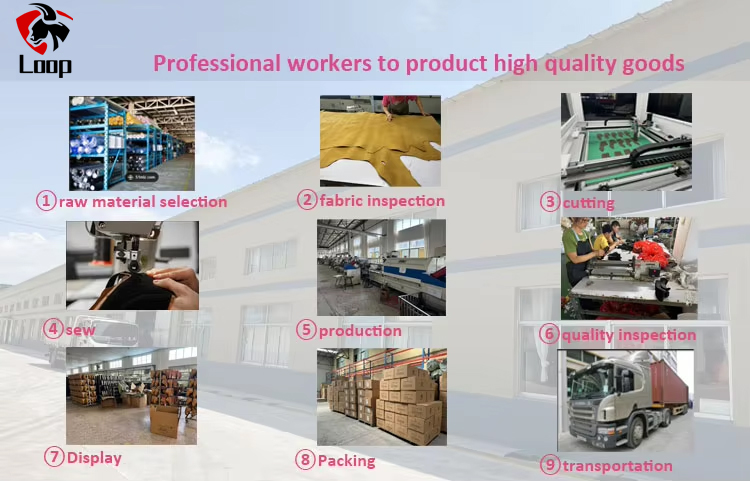
By partnering with Loop, clients benefit from fast pre-production samples and customized based on samples, a stable and efficient rapid delivery system, competitive pricing advantages, and timely access to trending industry product insights—enhancing overall procurement efficiency and market competitiveness.
At the same time, through multi-dimensional customization and support for bulk procurement, we help clients reduce trial-and-error costs, minimize procurement risks, and ensure efficient compatibility among different types of equipment.
Ultimately, what clients receive is not just individual products, but a complete equipment solution that truly fits operational needs and enhances overall mission performance.
Click here to contact us for Tactical Gear customized services.
When people first come into contact with tactical T-shirts, they may think they are just “more military-looking” shirts. But from a product logic perspective, their core value is:
Better suited for mission wear;
Better suited to work with other gear;
Better suited for long-duration and high-intensity scenarios;
Better suited for team-based and professional procurement.
This is also why demand for tactical T-shirts continues to grow in 2026: they meet the real need for “more comfortable, more practical, and more professional” clothing. Source
Compared with ordinary T-shirts, tactical T-shirts are better suited for training, duty use, outdoor activities, and everyday wear, meeting users’ demands for breathability, durability, and flexibility. At the same time, tactical styling has gradually entered the mainstream apparel market, making tactical T-shirts not only functional gear but also a clothing choice that combines practicality with a modern look.
Driven by both professional users and the civilian market, tactical T-shirts are becoming an increasingly popular category of tactical apparel.
If you are looking for high-quality ballistic vest, ballistic helmet, ballistic plate, Bulletproof Shield, Combat Uniforms, or other tactical accessories, contact us today. We provide professional-grade solutions, competitive pricing, and fast delivery to build a reliable tactical system for your needs.
Click here to contact us for Tactical Gear customized services


