
Views: 0 Author: Site Editor Publish Time: 2026-08-20 Origin: Site


Standard Level 4 armor exacts a heavy physical toll on professional end-users. Carrying 14 to 16 pounds of armor on your torso severely impacts operational endurance, degrades mobility, and accelerates long-term joint wear. Spinal compression and thermal burden increase exponentially during extended deployments. Defeating armor-piercing (AP) rifle threats remains a strict operational necessity. You cannot compromise on protection, but you also cannot sacrifice speed, agility, or situational awareness due to excessive load-bearing fatigue. Heavy gear slows reaction times and limits your ability to maneuver under fire. Evaluating modern lightweight solutions requires looking past marketing claims to understand material science, NIJ compliance, and the strict trade-offs between weight, cost, and durability.
Weight vs. Cost Reality: Reducing a Level 4 plate's weight below 6 pounds requires advanced ceramics, which exponentially increases the price per plate.
Material Composition is Critical: The shift from standard Alumina Oxide to Silicon Carbide or Boron Carbide is the primary driver of weight reduction in ceramic ballistic plates.
Beware of Edge Padding: Some manufacturers achieve "lightweight" status by using unarmored foam borders; verifying edge-to-edge protection is a mandatory evaluation step.
Ergonomics Equal Perceived Weight: Multi-curve profiles and specific cuts (SAPI/Swimmer) distribute load more efficiently, making plates feel lighter than their scale weight.
System-Level Integration: The lightest plates still cause fatigue if paired with an unsupportive plate carrier; load distribution is as important as scale weight.
To establish a baseline, we must define the exact performance criteria required by the National Institute of Justice. The NIJ Level IV standard mandates that an armor plate must stop a single .30-06 Springfield M2 Armor-Piercing (AP) projectile. This specific round weighs 166 grains, travels at approximately 2,880 feet per second, and features a hardened steel penetrator core. The kinetic energy delivered upon impact exceeds 3,100 foot-pounds. Defeating this massive energy transfer requires immense stopping power and structural integrity. Traditional level 4 armor plates achieve this using dense, heavy materials, resulting in a baseline weight of 7.5 to over 9 pounds per plate. A standard front and back set easily adds up to 18 pounds before you even factor in the weight of the carrier, loaded magazines, water, and communication gear.
The current operational threshold for "lightweight" categorizes plates weighing between 4.5 and 6.5 pounds for a standard 10x12 inch or Medium SAPI profile. Achieving this drastic weight reduction without compromising the AP defeat requirement demands highly advanced manufacturing techniques and premium raw materials. When a plate drops below the 6-pound mark, it fundamentally changes how an operator moves, fights, and recovers. Shedding three to four pounds off the torso drastically reduces metabolic fatigue, lowers oxygen consumption during sprints, and mitigates the long-term degradation of the lumbar spine over a 12-hour shift or a multi-day field operation.
Operators frequently face a threat profile dilemma: choosing between Level III+ and Level IV. If true armor-piercing threats are completely absent from your operational matrix, special threat (III+) plates offer significant weight savings. They reliably stop common intermediate rounds like the 5.56mm M855 green tip and 7.62x39mm API. However, if guaranteed AP defeat is required by your standard operating procedures, lightweight level 4 plates are the only uncompromising answer. Downgrading your protection level to save weight is a fatal error when facing high-velocity steel-core projectiles.
Steel armor fails completely at this threat level. Steel cannot achieve NIJ Level IV protection without prohibitive thickness and weight, often exceeding 8 to 10 pounds per plate. Furthermore, steel presents severe spalling and fragmentation risks. When a 2,880 fps projectile impacts a steel plate, the copper jacket and lead core vaporize into high-velocity fragmentation. This spall directs laterally into your carotid artery, jaw, and arms. Anti-spall coatings only mitigate the first or second hit before failing. Ceramic composites remain the only viable, field-proven path for true lightweight level iv body armor.
The physics of defeating an AP round rely on a violent, two-stage mechanical process. Modern engineering replaces sheer mass with advanced material hardness and tensile strength. The exact sequence of AP defeat mechanics happens in microseconds:
Initial Impact and Yaw: The projectile strikes the ceramic face. The extreme hardness of the ceramic arrests the bullet's forward momentum instantly, forcing the steel core to yaw and lose its aerodynamic stability.
Penetrator Shatter: The hardened steel core of the AP round shatters against the ceramic matrix. The ceramic must possess a higher Vickers hardness than the steel core to break it into smaller, less lethal fragments.
Ceramic Comminution: The ceramic strike face fractures locally. This controlled destruction absorbs massive amounts of kinetic energy. The plate sacrifices its own structural integrity to bleed off the bullet's energy.
Backer Deformation: The composite backer catches the residual ceramic and bullet fragments. The fibers stretch and deform, preventing penetration while minimizing backface signature (blunt force trauma) to your ribs and internal organs.
Understanding the exact materials inside your armor is non-negotiable. Any reputable ballistic plate manufacturer utilizes one of three primary ceramic materials for the strike face. The choice of ceramic dictates the plate's final weight, thickness, multi-hit capability, and durability. You cannot evaluate a plate for field use without knowing its core composition.
Alumina Oxide (Al2O3) serves as the budget standard across the industry. It is highly durable, easy to manufacture, and offers the lowest entry cost. However, it is also the densest and heaviest option available. Plates utilizing Alumina Oxide typically weigh 7.5 pounds or more. While they provide excellent protection and withstand rough handling in the back of a patrol vehicle, they are entirely unsuitable for true lightweight setups. If a plate is heavy and inexpensive, it almost certainly uses an Alumina strike face. It works well for static defense or vehicle armor, but it drags dismounted infantry down.
Silicon Carbide (SiC) represents the optimal middle ground for most professional users. It offers a 15% to 20% weight reduction over Alumina Oxide while maintaining excellent structural integrity. Silicon Carbide balances weight reduction and durability effectively, allowing manufacturers to produce plates in the 5.5 to 6.5-pound range. For standard patrol, SWAT, or infantry applications, SiC provides a tangible mobility upgrade. Furthermore, SiC often exhibits superior multi-hit capabilities compared to harder ceramics because its crack propagation is less severe upon initial impact.
Boron Carbide (B4C) is the premium lightweight standard. It is the third hardest material known to man, falling just behind diamond and cubic boron nitride. This extreme hardness allows manufacturers to use significantly less material to shatter an AP round, resulting in sub-5 pound Level 4 plates. Boron Carbide is the material of choice for elite units where maximum mobility is required. However, it requires specific handling protocols due to its inherent material brittleness. It is highly susceptible to micro-fractures from blunt force drops on concrete or tarmac.
The ceramic strike face only performs half the work. The backing material is equally critical for weight reduction and energy dispersion. Older plates used heavy aramid fibers or fiberglass backers. Modern lightweight plates utilize Ultra-High-Molecular-Weight Polyethylene (UHMWPE). UHMWPE is significantly lighter and stronger than traditional aramid fibers. The manufacturing process involves cross-plying unidirectional fibers and pressing them under extreme heat and thousands of pounds of pressure. When paired with Silicon Carbide or Boron Carbide, a pressed UHMWPE backer drastically reduces the overall weight of ceramic ballistic plates while providing superior backface signature mitigation.
Ceramic Material | Average Weight (10x12) | Durability / Drop Resistance | Ideal Operational Role |
|---|---|---|---|
Alumina Oxide (Al2O3) | 7.5 - 9.0 lbs | High | Static defense, vehicle armor, budget procurement |
Silicon Carbide (SiC) | 5.5 - 6.5 lbs | Medium-High | Patrol, standard infantry, general tactical response |
Boron Carbide (B4C) | 4.5 - 5.5 lbs | Medium (Requires strict care) | Special operations, high-mobility dismounted missions |
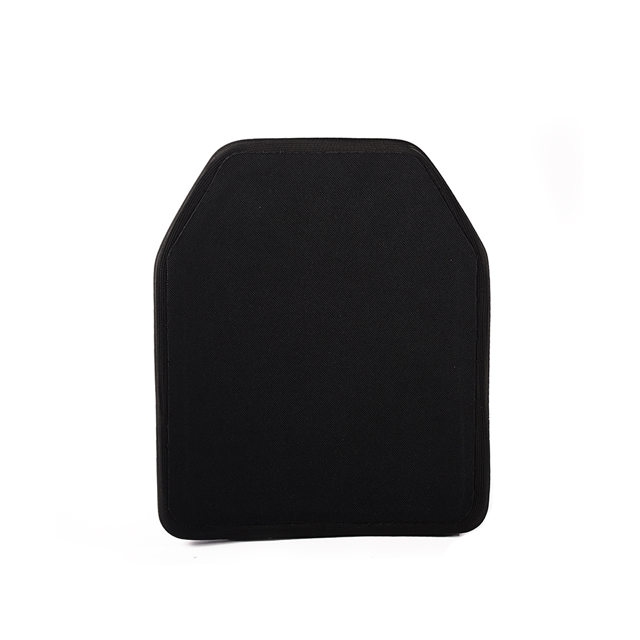
Selecting rifle protection plates requires evaluating specific dimensions beyond just the material type. You must scrutinize certification status, coverage area, ergonomic geometry, and how the plate interacts with your existing load carriage gear.
A massive operational difference exists between a plate being actively listed on the NIJ Compliant Products List (CPL) and a plate merely being "tested to" NIJ standards. Active NIJ certification means the government has audited the manufacturing process, tested multiple samples, and conducts ongoing Follow-up Inspection Testing (FIT) to ensure lot-to-lot consistency. "Tested to" simply means a manufacturer sent a single, potentially cherry-picked plate to an independent lab for a one-off test. Always demand active NIJ certification for duty use.
The transition from the older NIJ 0101.06 standard to the new NIJ 0101.07 standard introduces the RF3 threat level, which replaces the old Level IV designation. The RF3 standard mandates stricter testing protocols, including updated drop testing onto concrete before ballistic testing, and severe environmental conditioning. Future-proofing your ballistic protection equipment means looking for manufacturers who are already engineering plates to meet or exceed the rigorous RF3 requirements.
A common and dangerous industry deception involves achieving lower scale weight by leaving a 1-inch unarmored foam ring around the plate's perimeter. This foam border helps the plate pass NIJ drop tests by acting as a shock absorber, and it artificially lowers the total weight on the spec sheet. However, it leaves the wearer with a significantly reduced strike face. A nominal 10x12 plate with a 1-inch foam border only provides 8x10 inches of actual ceramic coverage, leaving your lungs and heart exposed at the margins.
You must verify true edge-to-edge ceramic coverage. Read the technical specification sheets carefully. If a plate feels suspiciously light for its material composition, perform a physical pinch test. Pinch the edges of the plate cover firmly. If you can compress the outer inch with your fingers, it is unarmored foam. Reputable manufacturers explicitly state "edge-to-edge ceramic" in their documentation. Do not compromise your vital organ coverage to save a few ounces on paper.
The physical geometry of the plate heavily influences your mobility, weapon handling, and physical comfort. SAPI (Small Arms Protective Insert) and ESAPI cuts offer a standard balance of coverage and arm movement. Swimmer cuts feature more aggressive angles at the top corners, removing more material to provide vastly superior shoulder mobility for swimming, climbing, and shouldering a rifle. Shooter cuts are similar but optimized specifically for a tight rifle stock weld. Choose the cut that matches your primary operational movements and weapon system.
Curvature dictates perceived weight. Single-curve plates are flat with a slight bend in the middle. They sit awkwardly on the chest, creating pressure points and hot spots that chafe during movement. Multi-curve plates feature complex geometries that contour to the natural shape of the human ribcage. This contouring distributes the plate's weight evenly across the torso, mitigating localized fatigue and preventing the plate from swinging like a pendulum when you run. A 6-pound multi-curve plate will always feel lighter and more comfortable than a 5.5-pound single-curve plate.
The lightest plates still cause severe fatigue if paired with an unsupportive plate carrier. A 5-pound plate requires a properly structured carrier to maximize the weight savings. The carrier acts as the suspension system for your armor. If the shoulder straps lack adequate padding, or if the cummerbund fails to secure the plates tightly against your body, the armor will sag and shift dynamically during movement.
Pairing premium military armor plates with subpar, unpadded carriers negates the ergonomic benefits entirely. The shifting weight creates dynamic loads on your spine and shoulders, reintroducing the exact fatigue you paid to eliminate. Invest in a carrier with structural integrity, rigid thermoplastic or carbon fiber cummerbunds, and proper shoulder yoke distribution to transfer the weight off your trapezius muscles and onto your core.
Procuring armor involves navigating the strict "Light, Cheap, Strong: Pick Two" paradigm. You cannot have a plate that is ultra-lightweight, highly durable against drops, and inexpensive. If a plate is light and cheap, it lacks structural strength or uses deceptive foam borders. If it is cheap and strong, it is made of heavy Alumina Oxide. If it is light and strong, it utilizes premium Boron Carbide and requires advanced manufacturing techniques.
While the NIJ Level 4 standard only requires a plate to defeat a single AP round, premium lightweight plates often possess robust multi-hit capabilities against lesser threats. In field conditions, operators expect their plates to withstand multiple impacts from 5.56mm M855A1 or 5.56mm M193 rounds. A high-quality Boron Carbide or Silicon Carbide plate can typically handle these intermediate threats, provided the strikes are adequately spaced. Silicon Carbide often outperforms Boron Carbide in multi-hit scenarios because B4C shatters more extensively upon initial impact, causing wider crack propagation across the strike face.
Understanding crack propagation is essential for evaluating multi-hit potential. When a round strikes a ceramic plate, radial and concentric cracks form around the impact zone. If these cracks reach the edge of the plate, the structural integrity of that entire section is compromised. Advanced manufacturers mitigate this by using tiled ceramic arrays or specialized composite wrapping techniques to contain the damage to a localized area, ensuring the rest of the plate remains viable for subsequent hits.
Deploying advanced lightweight armor introduces specific implementation risks. The primary risk is the inherent fragility of advanced ceramics, specifically Boron Carbide, when subjected to drops or blunt force trauma. While these materials excel at shattering high-velocity bullets, they can develop micro-fractures if dropped onto concrete, thrown into the back of a truck, or struck against hard surfaces during vehicle egress. A fractured ceramic strike face loses its ability to defeat AP rounds reliably.
Mitigation strategies require strict fleet management protocols. You cannot treat premium ceramic plates like steel. Establish regular inspection routines using a standardized field inspection protocol:
Visual Inspection: Check the Cordura or polyurea cover for tears, deep abrasions, or water ingress points that could degrade the UHMWPE backer.
Torque Test: Gently twist the plate diagonally with your hands to feel for internal grinding or shifting, which indicates a shattered ceramic core.
Tap Test: Use a solid metal object, like a heavy coin or a screwdriver handle, to tap the strike face in a grid pattern. Listen for a sharp, high-pitched ring versus a dull, dead thud that indicates a void or fracture.
X-Ray Verification: Mandate annual radiographic inspections for all issued Boron Carbide plates to identify microscopic stress fractures invisible to the naked eye.
Look beyond baseline NIJ certification. Encourage procurement officers to seek out independent ballistic torture tests. Reputable manufacturers subject their plates to extreme drop tests, extreme temperature fluctuations, and submersion protocols before ballistic testing. Validating durability in real-world, austere environments ensures the plates will perform outside of controlled laboratory settings.
Vetting your body armor supplier is the final critical step. Look for manufacturers with transparent sourcing of ballistic materials. Verify their ISO 9001 certification, which guarantees strict quality control, standardized manufacturing processes, and lot-to-lot consistency. A reliable supplier will provide accessible lot-testing data and clear technical specification sheets detailing material composition and edge coverage. Avoid suppliers who obscure their manufacturing origins or refuse to provide data on their ceramic sourcing.
Take the following steps to finalize your procurement and ensure operational readiness:
Measure your torso accurately from the sternal notch to the belly button to determine the correct SAPI size, ensuring the plate protects your vitals without restricting your ability to bend or sit.
Verify the exact model number of any potential plate directly on the official NIJ Compliant Products List (CPL) to confirm active certification and ongoing compliance testing.
Request detailed technical specification sheets from the manufacturer to confirm edge-to-edge ceramic coverage and identify the exact ceramic material used in the strike face.
Upgrade your plate carrier to a model featuring a rigid structural cummerbund and padded shoulder yokes to properly support and distribute the weight of your new plates.
A: A true lightweight Level 4 plate should weigh between 4.5 and 6.5 pounds for a standard 10x12 inch or Medium SAPI cut. This represents a significant reduction compared to standard Level 4 plates, which typically weigh 7.5 to over 9 pounds per plate.
A: Choose Level IV if you face armor-piercing threats like the .30-06 M2AP. Level IV guarantees AP defeat. If your threat matrix only includes intermediate rounds like 5.56mm M855 or 7.62x39mm, Level III+ offers a lighter alternative, but it will fail against true AP ammunition.
A: Yes. Ceramic plates are vastly superior for high-level rifle protection. Steel is dangerously heavy and presents severe spalling risks, sending bullet fragments laterally into the wearer's neck and limbs. Ceramic absorbs the energy and captures fragments safely within the composite backer.
A: Single-curve plates have one continuous bend and often sit awkwardly against the chest, creating pressure points. Multi-curve plates feature complex geometries that contour naturally to the human ribcage. This distributes the weight evenly, making the plate feel significantly lighter and more comfortable during extended wear.
A: Read the manufacturer's technical specifications carefully; reputable brands will explicitly state "edge-to-edge ceramic." Physically, you can pinch the outer perimeter of the plate. If the outer inch compresses easily, it is likely an unarmored foam border used to save weight and pass drop tests.
A: The NIJ Level 4 standard only requires a plate to stop a single .30-06 M2AP round. While premium plates may stop subsequent AP rounds if the strikes are widely spaced, it is not guaranteed. However, high-quality Level 4 plates easily defeat multiple impacts from lesser threats like 5.56mm or 7.62x39mm.


