
Views: 0 Author: Site Editor Publish Time: 2026-08-27 Origin: Site


Modern tactical operations demand headgear that balances strict ballistic integrity with the spatial requirements of advanced communication systems. Legacy combat helmets often impede modern headsets, add unnecessary weight, and restrict mobility in confined spaces. Conversely, ultra-high-cut variants sacrifice critical lateral ballistic coverage, forcing procurement officers to choose between operator protection and equipment modularity. Analyzing the Modular Integrated Communications Helmet (MICH)—originally developed by the U.S. military—reveals a highly effective middle ground. It provides a proven framework for evaluating shell variants, ballistic materials, and integration capabilities for military and law enforcement applications. A properly configured MICH tactical helmet bridges the gap between operator mobility and essential threat defense. We will examine the specific design variations, material science, and procurement strategies necessary to field these systems effectively without compromising squad safety or operational readiness.
Standardized Protection: Authentic MICH systems function as a certified NIJ IIIA helmet, defending against handgun threats, high-velocity fragmentation, and offering verified multi-hit capabilities.
Design Flexibility: Variations in shell cut (Full, Mid, High) dictate the operational trade-off between maximum coverage area and seamless communications integration.
Material Impact: The choice between traditional Aramid/Kevlar and UHMWPE directly influences operational fatigue, thermal resistance, and unit cost.
Supplier Verification: Partnering with a vetted MICH helmet manufacturer is critical to ensure independent batch testing and avoid commercial-grade, riot, or non-ballistic replicas.
The Personnel Armor System for Ground Troops (PASGT) served as the standard issue headgear for decades. Field operators commonly referred to it as the "K-pot." While it provided adequate fragmentation protection, its physical geometry created severe operational hurdles in modern combat environments. The PASGT featured a prominent front peak and a low-hanging rear brim. When operators hit the dirt to fire from a prone position, the rear brim collided with the back collar of their body armor. This collision pushed the helmet forward, dropping the front peak directly over their eyes and blinding them during firefights.
The MICH system eliminated these physical limitations. Engineers removed the front peak entirely and raised the cut at the back and sides. This low-profile geometry improves upward line-of-sight and facilitates natural prone shooting positions. It significantly reduces neck strain by allowing a full range of motion without armor interference. The center of gravity sits closer to the natural pivot point of the head, meaning operators experience less fatigue during prolonged vehicle patrols and dismounted operations.
Beyond physical geometry, the primary requirement for modern protective headgear is seamless integration with over-the-ear communication headsets. The MICH achieves this without compromising the structural integrity of the ballistic shell. Operators can wear active hearing protection and radio headsets under a reliable combat helmet. This integration ensures clear squad communication while maintaining essential ballistic defense against battlefield threats.
Elimination of the Front Peak: Removes visual obstruction when looking upward or using night vision devices.
Raised Rear Brim: Prevents interference with plate carrier collars during prone weapon manipulation.
Optimized Center of Gravity: Reduces neck fatigue by balancing the shell weight directly over the spine.
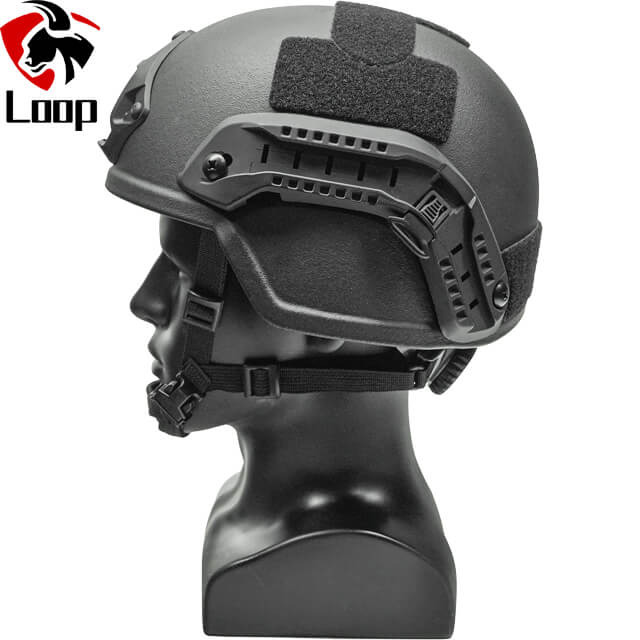
The MICH platform offers three distinct shell cuts. Each cut addresses specific operational requirements regarding coverage area and accessory compatibility. Selecting the right variant dictates the balance between lateral protection and modularity.
The MICH 2000 provides maximum side protection and full ear coverage. The shell extends downward over the temporal and parietal regions of the skull. This design maximizes the surface area protected against fragmentation and handgun threats. It serves as the standard for general infantry and acts as the baseline law enforcement helmet for patrol officers and riot response units. These applications prioritize maximum fragmentation protection over specialized communications gear. While it can accommodate some low-profile neckband headsets, the full ear coverage restricts the use of bulky over-the-ear comms systems like the Peltor ComTac series.
The MICH 2001 features a completely exposed ear design. Manufacturers built this variant for maximum headset compatibility and reduced weight. Operators can easily wear large, active noise-canceling headsets without the shell pressing the ear cups uncomfortably into their head. The high cut removes the lateral shell material that normally covers the ears. This creates a significant reduction in lateral ballistic protection. Specialized tactical units, such as SWAT teams and special operations forces, accept this trade-off. They require immediate, unhindered access to communications and situational awareness tools during dynamic entries.
The MICH 2002 acts as the compromise model. It features partial ear coverage. The shell drops slightly lower than the 2001 but remains higher than the 2000. This mid-cut accommodates most comms systems while retaining more shell integrity and protection than the high-cut variant. It offers a balanced solution for mechanized infantry and specialized law enforcement teams. These units need both communication capabilities and enhanced side protection during vehicle interdictions and close-quarters battle.
MICH Variant | Ear Coverage | Comms Compatibility | Primary Application |
|---|---|---|---|
MICH 2000 | Full Coverage | Low (Neckband headsets only) | General Infantry, Patrol, Riot Control |
MICH 2001 | Exposed (High Cut) | Maximum (Over-the-ear headsets) | Special Operations, SWAT |
MICH 2002 | Partial (Mid Cut) | Moderate (Most standard headsets) | Mechanized Infantry, Tactical Teams |
Evaluating headgear requires a strict understanding of its ballistic capabilities and the materials used in its construction. The shell must stop specific threats while managing the kinetic energy transfer that causes blunt force trauma.
A certified NIJ IIIA helmet must meet strict performance parameters. The National Institute of Justice (NIJ) Level IIIA standard requires the shell to stop .44 Magnum Semi-Jacketed Hollow Point (SJHP) and 9mm Full Metal Jacket (FMJ) projectiles. It must also defend against standard fragmentation threats. Laboratories test this using 17-grain Fragment Simulating Projectiles (FSP) to measure the V50 ballistic limit, ensuring the shell can defeat shrapnel traveling at high velocities.
Multi-hit performance defines a high-quality MICH ballistic helmet. The shell must offer protection even after taking multiple hits from high-caliber handgun projectiles. It must do this without catastrophic shell failure or excessive backface deformation. Backface deformation occurs when the impact pushes the interior of the shell inward. Excessive deformation causes lethal blunt force trauma, crushing the skull even if the bullet does not penetrate the Kevlar material.
Operators must understand the operational limitations of this equipment. A standard MICH is not rated for direct rifle fire. It will not stop 5.56x45mm or 7.62x39mm rounds without the addition of specialized applique armor plates. Expecting rifle-level protection from a standalone Level IIIA shell creates severe tactical vulnerabilities in the field.
Manufacturers construct these shells using two primary ballistic materials. Each material offers distinct advantages and operational considerations based on chemical structure and manufacturing processes.
Aramid fibers, commonly known by brand names like Kevlar or Twaron, possess a proven track record spanning decades. Manufacturers bond layers of Aramid fabric using specialized phenolic resins under high heat and pressure. Aramid offers high heat and flame resistance compared to other synthetic polymers. It maintains structural stability under extreme environmental conditions. The primary drawback of an Aramid shell is its weight. It creates a heavier profile, which contributes to operator neck fatigue during extended deployments.
Ultra-High-Molecular-Weight Polyethylene (UHMWPE) provides significant weight reduction benefits. A UHMWPE shell can weigh up to 30% less than a comparable Aramid shell while offering the exact same ballistic protection. Manufacturers cross-lay unidirectional polyethylene fibers and press them into a rigid matrix. This weight reduction drastically lowers neck strain and improves operator mobility. However, UHMWPE requires strict temperature storage protocols. Prolonged exposure to extreme heat can cause material delamination. Leaving the gear in a vehicle trunk during summer in a desert environment can compromise its ballistic integrity over time.
Modern tactical headgear functions as a structural platform for essential equipment. A complete protective helmet system must support various accessories without failing under load or shifting during dynamic movement.
Night Vision Goggles (NVGs) require a rigid mounting solution. The front shroud must provide absolute stability to prevent optic vibration during movement. A loose shroud degrades the operator's vision and causes severe eye strain. High-quality shrouds utilize aerospace-grade aluminum or reinforced polymers. They anchor to the shell using a three-hole bolt pattern. This mechanical fastening ensures the shroud will not tear away under the weight of heavy dual-tube or quad-tube night vision systems.
Side rails enable modular scalability. Operators use these rails to attach task lights, infrared strobes, high-definition cameras, and oxygen mask straps for HALO jumps. The rails must withstand significant torque. If an operator snags a mounted camera on a doorframe during a room clearing, the rail must not detach from the ballistic shell. Reliable rail systems use glass-filled nylon polymers and integrate seamlessly with the shell geometry to maintain a snag-free profile.
The internal components are just as critical as the ballistic shell itself. A 4-point chin strap and dial-liner system are necessary for stability under load. When operators mount heavy NVGs to the front of the helmet, a standard chin strap allows the helmet to tilt forward. A 4-point H-nape or V-nape system with tension dials locks the helmet securely to the operator's head. This prevents the optic from shifting out of alignment during a sprint.
Internal pad configurations mitigate Backface Signature (BFS) and blunt force trauma upon projectile impact. Advanced padding systems use materials like Expanded Polypropylene (EPP) and proprietary memory foams. These pads absorb the kinetic energy transferred through the shell during a ballistic strike or a physical fall. Dual-density foam systems provide a rigid base for impact absorption and a soft outer layer for operator comfort.
Acquiring reliable headgear requires rigorous vetting of the manufacturing source. Agencies must look beyond marketing claims and demand empirical data to ensure operator safety.
Procurement officers must outline the requirement for independent, third-party NIJ compliance testing documentation. Laboratories like NTS Chesapeake provide unbiased verification of ballistic performance. A reputable MICH helmet manufacturer will readily supply these test reports. The reports must detail the exact testing parameters, including projectile velocities, multi-hit spacing, and backface deformation measurements.
Evaluate the manufacturer for ISO 9001 certifications. This certification ensures the facility maintains strict quality management systems. Demand strict lot-testing protocols. Manufacturers should pull random samples from every production batch and subject them to destructive ballistic testing. This guarantees consistency across the entire order. Relying on a single prototype test from five years ago is a dangerous procurement practice.
Ballistic materials do not last forever. Discuss standard 5-year ballistic warranties with the ballistic helmet supplier. Environmental factors degrade protective capabilities over time. Exposure to ultraviolet light, moisture, salt water, and extreme temperature fluctuations breaks down the molecular bonds in Aramid and UHMWPE fibers. Agencies must track the manufacturing date of every shell in their inventory to ensure they cycle out expired gear.
Agencies must also factor in the recurring replacement of soft components. Suspension pads compress and lose their impact-absorbing properties through daily use and sweat exposure. Retention systems fray and stretch. Helmet covers tear. Replacing these components regularly ensures the gear remains safe and functional throughout its 5-year ballistic lifespan. A well-maintained suspension system is critical for mitigating blunt force trauma.
Deploying new headgear introduces operational risks. Agencies must implement specific mitigation strategies to ensure operator safety and maximize equipment effectiveness in the field.
Improper sizing degrades both protection and operator effectiveness. A shell that is too small exposes vital areas of the skull to fragmentation. It rides too high on the head, leaving the temporal regions vulnerable. A shell that is too large shifts under the weight of NVGs. This shifting blinds the operator during critical movements and causes severe neck fatigue as they constantly adjust the gear.
Establish strict head-measurement protocols. Do not rely on generic hat sizes. Measure the circumference of the head just above the eyebrows using a flexible tape measure. Mandate fit-testing prior to agency-wide procurement. Operators must wear the gear with all intended accessories. They must test comms, NVGs, and eye protection simultaneously to verify compatibility and comfort. Adjusting pad thickness can fine-tune the fit, but the base shell size must be correct.
The tactical market contains numerous deceptive products. Procurement teams must clearly distinguish between true ballistic helmets and riot or bump helmets. Bump helmets are only designed to provide protection from hand-wielded impact devices or thrown objects. They do not stop small arms projectiles. Using a bump helmet in a ballistic threat environment guarantees catastrophic failure.
Identify the risk of airsoft and paintball replicas. Many overseas factories produce commercial ABS plastic models marketed deceptively in the tactical space. These replicas look identical to real ballistic gear. They feature fake rails, fake shrouds, and convincing paint jobs. However, they offer zero ballistic protection. The plastic shells shatter upon impact, turning into secondary fragmentation.
Ensure procurement only flows through a verified tactical gear supplier. Demand a transparent supply chain. Look for verifiable National Stock Numbers (NSN) or equivalent agency credentials. Inspect the interior labels for clear manufacturing dates, lot numbers, and NIJ threat level designations. If a supplier cannot prove the origin of their ballistic materials, disqualify them immediately.
The MICH platform remains a highly relevant, versatile, and structurally sound military tactical helmet. It offers a necessary balance between ballistic coverage and modern modularity. By understanding the differences in shell cuts, ballistic materials, and integration capabilities, agencies can equip their personnel with reliable protection. Proper vetting of suppliers and strict sizing protocols ensure the equipment performs flawlessly in the field.
Base selection on specific unit requirements. Opt for the MICH 2000 for maximum coverage in unpredictable threat environments. Choose the MICH 2001 or 2002 for comms-heavy, specialized operations where mobility and headset compatibility take precedence.
Request Test and Evaluation (T&E) samples to assess physical weight and accessory compatibility in field conditions.
Demand recent, third-party ballistic lab reports detailing multi-hit performance and backface deformation metrics.
Initiate pilot testing with end-users before finalizing agency-wide contracts to verify comfort and operational integration.
Establish a strict sizing and fitment protocol to ensure maximum protection and prevent equipment shifting under load.
A: The primary difference lies in the shell cut and intended application. The MICH generally offers more ballistic coverage, especially in the 2000 and 2002 variants. The FAST (Future Assault Shell Technology) helmet features an ultra-high cut designed specifically to maximize accessory integration and reduce weight. It sacrifices lateral ear coverage for absolute modularity.
A: No. A standard MICH is rated for NIJ Level IIIA. It stops handgun threats up to .44 Magnum and 9mm, as well as standard fragmentation. It is not designed to stop direct impacts from rifle rounds like 5.56mm or 7.62mm without the addition of specialized, heavy applique armor plates.
A: A high-quality, certified NIJ IIIA MICH helmet is designed to withstand multiple hits from handgun calibers. Testing protocols typically require the shell to defeat at least four spaced impacts without penetration or excessive backface deformation. However, any helmet that sustains a ballistic impact must be immediately retired from service.
A: A bump helmet is constructed from non-ballistic materials like carbon fiber or ABS plastic. It protects against blunt force trauma, falls, and falling debris. A ballistic combat helmet is made from Aramid or UHMWPE. It is specifically engineered to stop bullets and high-velocity shrapnel.
A: Weight varies based on the shell cut, size, and material. A standard Aramid MICH 2000 (Full Cut) in size large typically weighs between 3.0 and 3.4 pounds. UHMWPE variants and high-cut models weigh significantly less, often dropping below 2.6 pounds.
A: You must request independent, third-party ballistic testing reports from the manufacturer. These reports should come from certified laboratories like NTS Chesapeake. Do not rely solely on marketing labels or in-house testing claims. The documentation must explicitly state compliance with NIJ Level IIIA parameters.


