
Views: 0 Author: Site Editor Publish Time: 2026-07-06 Origin: Site


Introduction
Tactical helmets have always been one of the core components of a complete tactical equipment system. Entering 2026, users no longer expect a tactical helmet to simply provide protection. Instead, greater emphasis is being placed on lightweight construction, wearing comfort, equipment compatibility, modularity, and mission adaptability.
Whether for military personnel, law enforcement officers, security teams, tactical training, or high-mobility outdoor operations, tactical helmets are no longer just protective headgear. They have gradually evolved into a tactical platform capable of integrating night vision devices, communication systems, goggles, helmet lights, and other mission accessories.
For procurement managers, brands, distributors, and end users, understanding how to choose the right tactical helmet in 2026 not only helps select more suitable products but also assists in building a more efficient equipment system. This article provides a comprehensive overview of tactical helmet types, purposes, differences, advantages, applications, and selection methods to help you better understand today's tactical helmet market.
The growing demand for tactical helmets is mainly driven by several factors:
Mission environments are becoming increasingly complex.
Users require greater comfort during extended wear.
Tactical equipment is becoming more integrated and system-oriented.
Compatibility with night vision devices, communication headsets, and cameras is increasingly important.
Finding the balance between lightweight design and reliable protection has become a key priority.
Government and organizational procurement now focuses more on complete equipment solutions rather than individual products.
In the past, many buyers only paid attention to the appearance or protection level of a helmet. Today, however, buyers are equally concerned with:
Helmet weight
Fit and stability
Pressure during long-term wear
Compatibility with communication headsets
Night vision mounting capability
Customization options for colors and accessories
These factors explain why tactical helmet selection has become far more professional and detailed in 2026.
The Full-Cut helmet provides larger coverage and emphasizes maximum protective area.
Features:
Larger protective coverage
Traditional structural design
Suitable for basic protection requirements
Generally offers fewer accessory compatibility options
Typical Applications:
General patrol
Security operations
Traditional duty assignments
Military High Protection Assault Equipment Battle Bulletproof Helmet

Mid-Cut helmets offer a balance between protection and accessory compatibility.
Features:
Lighter than Full-Cut helmets
Greater coverage than High-Cut helmets
Good accessory compatibility
Suitable for multiple mission types
Typical Applications:
Daily patrol
Law enforcement
Security services
Tactical training
Army For UHMWPE Mid Cut Fast Sentry Tactical Helmet

The High-Cut helmet has become one of the most popular tactical helmet designs in 2026, especially for modern tactical operations.
Features:
Larger ear clearance
Excellent compatibility with communication headsets
Ideal for night vision equipment
Improved mobility
Reduced wearing pressure
Typical Applications:
Special operations
High-mobility missions
Tactical training
Night operations
Communication-intensive missions
Loop Night Vision Compatibility Modularization Ballistic Helmet

Super High-Cut helmets emphasize lightweight performance and maximum accessory compatibility, making them ideal for highly mobile operations.
Features:
Lighter overall weight
Better support for advanced tactical accessories
Modern appearance
Excellent adaptability for complex missions
Typical Applications:
High-speed tactical operations
Premium customized projects
Advanced tactical systems
Professional Protection High Cut Fast Kevlar helmet

Full-Cut helmets provide the largest coverage.
High-Cut helmets prioritize compatibility and mobility.
Mid-Cut helmets offer a balance between both.
High-Cut helmets are better suited for communication headsets, night vision devices, and tactical accessories.
Full-Cut helmets generally offer fewer accessory options.
Greater coverage usually results in higher weight.
Lightweight designs improve comfort during extended operations.
Helmet structure, suspension systems, and padding directly affect long-term comfort.
General patrols typically favor Full-Cut or Mid-Cut helmets.
High-mobility operations generally prefer High-Cut or Super High-Cut helmets.

Click here to contact us for Tactical Gear customized services
The most fundamental purpose is protecting the head from impacts, fragments, and other operational hazards.
Modern tactical helmets function as equipment platforms. Compatibility with communication systems, night vision devices, helmet lights, and cameras significantly improves mission effectiveness.
Standardized helmet systems improve identification, communication, and operational coordination.
For security organizations and law enforcement agencies, uniform tactical helmets help establish a professional image.
Modern helmets support rails, hook-and-loop panels, NVG mounts, and other accessories to adapt to different operational requirements.
Heavy helmets or poor suspension systems can reduce operational performance during prolonged wear.
Communication headsets, night vision devices, goggles, and helmet lights all depend on proper helmet compatibility.
Different missions require different helmet configurations and accessory combinations.
Modern buyers evaluate complete equipment systems instead of focusing solely on individual specifications.

Click here to contact us for Tactical Gear customized services
Law enforcement patrol
Security operations
Tactical training
High-mobility missions
Night operations
Outdoor and complex environments
Patrol duties → Mid-Cut or Full-Cut helmets
High-mobility missions → High-Cut or Super High-Cut helmets
Communication-intensive operations → High-Cut helmets
Extended wear → Lightweight models with superior comfort
Higher-risk missions require greater protective coverage and structural stability, while mobility-focused missions prioritize compatibility and reduced weight.
Weight is often overlooked but has one of the greatest impacts on long-term comfort.

Click here to contact us for Tactical Gear customized services
High-quality suspension systems greatly improve stability, comfort, and pressure distribution.
If your mission requires:
Night vision devices
Communication headsets
Helmet lights
Protective goggles
Action cameras
then compatibility should be a top priority.
For procurement projects, OEM brands, and distributors, customized colors, logos, coatings, rails, and accessories add significant value.
Helmet coatings influence:
Abrasion resistance
Low-reflection performance
Appearance quality
Service life
Price only represents part of the product value and does not determine whether the helmet truly fits your mission.
An ideal tactical helmet should provide:
Appropriate protection
Comfortable long-term wear
Excellent accessory compatibility
Reasonable weight
Mission-oriented design
For procurement professionals, selecting the wrong helmet often costs much more than paying for a higher-quality one.

Click here to contact us for Tactical Gear customized services
The manufacturer's capabilities directly influence:
Material consistency
Manufacturing precision
Helmet quality consistency
Customization capability
Mass production capacity
Accessory integration capability
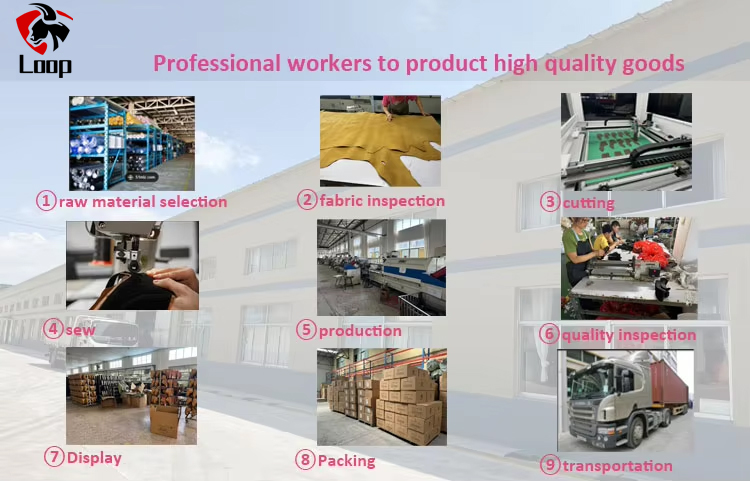
For brands, distributors, and institutional buyers, working with a reliable manufacturer ensures stable product quality and efficient long-term cooperation.
In practical applications, choosing a supplier that can provide professional sizing guidance and customization services is equally important to ensure that tactical gear performs as intended.
Compared to suppliers that only offer standardized products, we focus on real-world usage scenarios and mission requirements, providing precise sizing recommendations and system-based configuration solutions to achieve an optimal balance between protection, stability, and comfort.
By partnering with Loop, clients benefit from fast pre-production samples and customized based on samples, a stable and efficient rapid delivery system, competitive pricing advantages, and timely access to trending industry product insights—enhancing overall procurement efficiency and market competitiveness.
At the same time, through multi-dimensional customization and support for bulk procurement, we help clients reduce trial-and-error costs, minimize procurement risks, and ensure efficient compatibility among different types of equipment.
Ultimately, what clients receive is not just individual products, but a complete equipment solution that truly fits operational needs and enhances overall mission performance.
Click here to contact us for Tactical Gear customized services.
Looking beyond 2026, tactical helmets are expected to continue evolving toward:
Lighter weight
Better compatibility
Greater modularity
More comfortable suspension systems
Multi-mission adaptability
Higher levels of customization
Future tactical helmets will no longer serve solely as protective shells—they will become comprehensive mission platforms.
Choosing the right tactical helmet in 2026 is not about selecting the most expensive model or the one that appears the most professional. The key is choosing a helmet that truly matches your operational requirements.
Different helmet types vary significantly in protective coverage, weight, compatibility, comfort, and application scenarios.
For users, understanding these differences leads to better equipment choices. For procurement managers and brand owners, selecting the right helmet system improves inquiry quality, customer satisfaction, and purchasing efficiency.
If you are selecting tactical helmets for your organization, brand, or project, it is recommended to prioritize four key factors: mission requirements, wearing comfort, accessory compatibility, and customization capability. This approach will help you identify the most suitable tactical helmet solution.
If you are looking for high-quality ballistic vest, ballistic helmet, ballistic plate, Bulletproof Shield, Combat Uniforms, or other tactical accessories, contact us today. We provide professional-grade solutions, competitive pricing, and fast delivery to build a reliable tactical system for your needs.
Click here to contact us for Tactical Gear customized services


