
Views: 0 Author: Site Editor Publish Time: 2026-08-13 Origin: Site


Industry News · 2026 International Protective Equipment Trends
With the continuous changes in the global security environment and modern operational concepts, personal protective equipment (PPE) is entering a new round of technological upgrades. At the Eurosatory 2026 international defense exhibition in Paris, France, numerous protective equipment manufacturers from Europe, North America, the Middle East, and Asia showcased the latest ballistic helmets, body armor, tactical vests, and composite armor systems. One common trend was particularly clear:
The future of protective equipment is not simply about greater protection, but about becoming lighter, more modular, and more ergonomic.
Compared with the past, when the industry focused mainly on higher protection levels, the focus in 2026 has shifted toward the combined application of UHMWPE, aramid, advanced ceramics, and hybrid composite materials. These materials are driving military, law enforcement, defense, and security industries into a new era of “lightweight + modular” protective equipment.
This article analyzes global protective equipment trends based on the direction reflected at Eurosatory 2026 and helps buyers understand the products and technologies that deserve the most attention in the coming years.
As one of the world's most influential defense and security exhibitions, Eurosatory has long served as an important indicator of international military and law enforcement equipment development.
Three clear changes could be observed in the personal protective equipment sector at the 2026 exhibition:
Lighter weight — reducing the burden on personnel and improving mobility.
Greater modularity — allowing equipment to be quickly configured according to different missions.
More composite materials — allowing different materials to work together rather than relying on a single material.
More manufacturers are introducing expandable tactical vests, ultra-lightweight PE ballistic helmets, multi-curve ceramic armor plates, and quick-change modular systems. This indicates that future equipment will place greater emphasis on integrated systems rather than the performance of individual products alone.
Camouflage Combat Uniform Army Best Ballistic Vest

Modern soldiers and law enforcement personnel are carrying an increasing amount of equipment, including:
Communication equipment
Night vision systems
Medical equipment
The total weight can often exceed 25–35 kg.
Therefore, reducing the weight of every piece of equipment means improving overall operational efficiency.
Advantage | Impact on Missions |
|---|---|
Lower load | Extends continuous operating time |
Higher mobility | Improves running, climbing, and rapid response capabilities |
Reduced fatigue | Reduces physical stress caused by long-term wearing |
Higher comfort | Improves all-day operational experience |
This is why UHMWPE and advanced ceramic materials have become major areas of interest in 2026.
What Is Ultra-Light Ballistic Material Polyethylene?

UHMWPE (Ultra High Molecular Weight Polyethylene) is a high-performance fiber material that has become an important foundation for lightweight protective equipment in recent years.
UHMWPE is increasingly used in lightweight ballistic helmets, ballistic armor plates, and other protective systems because of its low density and high specific strength.
Its main advantages include:
Extremely lightweight
High specific strength
Good impact resistance
Good resistance to corrosion, moisture, and humid environments
At Eurosatory 2026, several manufacturers showcased PE ballistic helmets and PE armor plates, further demonstrating that UHMWPE has become an important direction for future lightweight equipment.
PE ballistic helmets
UHMWPE armor plates
Soft body armor
Backing materials for ballistic protection systems
For users who require long-duration patrols and high-mobility missions, UHMWPE is increasingly becoming an alternative to some traditional heavier materials.
Although PE materials are developing rapidly, aramid, including Kevlar, remains an important component of international protective equipment.
Kevlar: The Unbreakable Thread - From Discovery To Essential Gear

Excellent high-temperature resistance
Good flexibility
Stable long-term mechanical performance
Mature and reliable manufacturing processes
Compared with PE, aramid is particularly suitable for:
High-temperature environments
Protective clothing
Blast protection equipment
Flexible protective systems
Over the coming years, PE and aramid are unlikely to simply replace one another. Instead, they are expected to complement each other according to different application scenarios.
In advanced protection applications, ceramics remain a core material for hard ballistic armor plates.
Major ceramic materials include:
What Is Alumina Ceramic Armor Plate?

Features:
Relatively lower cost
Mature manufacturing processes
Wide range of applications
Suitable for standard military and law enforcement protection projects.
What Is Silicon Carbide Ceramic Armor Plate?

Features:
Lighter weight
Higher hardness
Strong overall performance
Silicon carbide has become an important choice for medium- and high-end ballistic armor plates.
Boron Carbide Ballistic Ceramic (B₄C)

Features:
Extremely lightweight
Extremely high hardness
Boron carbide is mainly used in high-end specialized equipment. Due to its relatively high cost, it remains primarily suited to professional applications.
In practical applications, choosing a supplier that can provide professional sizing guidance and customization services is equally important to ensure that tactical gear performs as intended.
Compared to suppliers that only offer standardized products, we focus on real-world usage scenarios and mission requirements, providing precise sizing recommendations and system-based configuration solutions to achieve an optimal balance between protection, stability, and comfort.
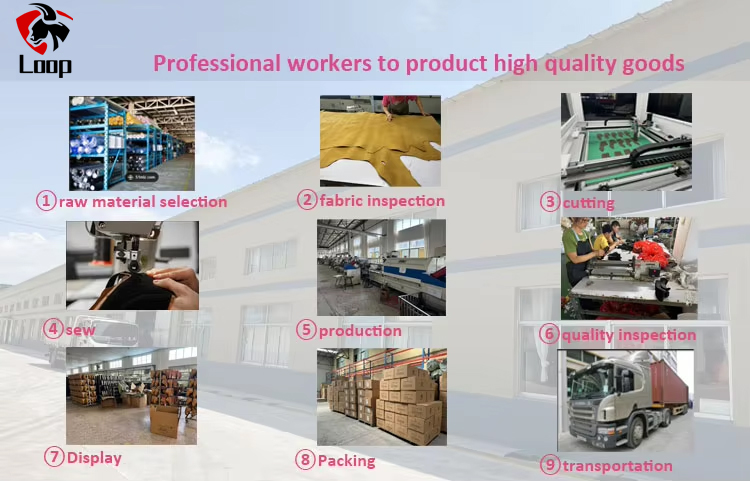
By partnering with Loop, clients benefit from fast pre-production samples and customized based on samples, a stable and efficient rapid delivery system, competitive pricing advantages, and timely access to trending industry product insights—enhancing overall procurement efficiency and market competitiveness.
At the same time, through multi-dimensional customization and support for bulk procurement, we help clients reduce trial-and-error costs, minimize procurement risks, and ensure efficient compatibility among different types of equipment.
Ultimately, what clients receive is not just individual products, but a complete equipment solution that truly fits operational needs and enhances overall mission performance.
Click here to contact us for Tactical Gear customized services.
One of the most important trends in 2026 is not a single material, but hybrid composite materials.
Individual materials often have their own limitations:
Material | Advantages | Limitations |
|---|---|---|
UHMWPE | Extremely lightweight | Limited against certain high-level hard armor threats |
Aramid | High-temperature resistance | Relatively higher weight |
Ceramic | High hardness | Can be brittle when used alone |
Therefore, new-generation equipment often uses multilayer composite structures, such as:
Ceramic + UHMWPE
Ceramic + aramid
UHMWPE + aramid hybrid fabrics
NIJ Level III Ceramic Ballistic Plates 10x12 Alumina/PE Body Armor

These structures can balance:
Protection capability
Weight control
Impact absorption
Service life
Hybrid materials are becoming an important development direction for international protective equipment.
In addition to material upgrades, modularity has become another key trend reflected at Eurosatory 2026.
Modularity means that equipment can be quickly adjusted according to mission requirements instead of relying on a fixed configuration.
Typical products include:
Quick-release tactical vests
MOLLE modular systems
Replaceable ballistic armor plates
Modular helmet rail systems
Detachable medical pouches and magazine pouches
Tactical Vest for Shooting Training Quick Release & MOLLE System

Modular Design | Value |
|---|---|
Quick-release system | Allows equipment to be removed quickly in emergencies |
MOLLE system | Allows users to freely attach different accessories |
Standard interfaces | Improves compatibility between accessories from different manufacturers |
Replaceable components | Reduces long-term maintenance and upgrade costs |
Future procurement is increasingly moving toward purchasing complete equipment platforms rather than simply purchasing an individual tactical vest.
Considering material and design trends, the following products are becoming important directions in the international market:
Product | Core Trend |
|---|---|
PE ballistic helmet | Ultra-lightweight design |
Multi-curve ceramic armor plate | Improved comfort and fit |
Quick-release tactical vest | Modular platform |
UHMWPE armor plate | Long-duration carrying |
Modular tactical backpack | Multi-mission compatibility |
Aramid soft body armor | All-weather protection |
For brands and buyers, these products are also among the categories with strong potential in the coming years.
Even at the same protection level, different materials can result in differences of several hundred grams or even more than one kilogram.
During long-term use, weight can often be just as important as the stated protection specifications.
As equipment is upgraded more frequently in the future, modular design can:
Extend product service life
Reduce upgrade costs
Improve mission adaptability
Professional manufacturers can typically provide:
Third-party test reports
Raw material traceability
OEM/ODM customization capabilities
Stable mass-production capabilities
These are also important considerations for international project procurement.
Based on the products and technologies showcased at Eurosatory 2026, international protective equipment development has entered a new stage.
Future competition will no longer focus only on “who provides greater ballistic protection,” but also on:
Who can make equipment lighter
Who can make equipment more comfortable
Who can make equipment easier to expand
Who can make equipment more suitable for integrated operational systems
UHMWPE, aramid, advanced ceramics, and hybrid composite materials will jointly form the foundation of next-generation personal protective equipment, while modular platforms are expected to become a new standard for military, law enforcement, and security industries.
For buyers, investing in lightweight and modular products in advance can not only improve equipment competitiveness but also help meet the evolving requirements of the international market.
If you are looking for high-quality ballistic vest, ballistic helmet, ballistic plate, Bulletproof Shield, Combat Uniforms, or other tactical accessories, contact us today. We provide professional-grade solutions, competitive pricing, and fast delivery to build a reliable tactical system for your needs.
Click here to contact us for Tactical Gear customized services


