
Views: 0 Author: Site Editor Publish Time: 2026-08-27 Origin: Site


Tactical operators face a historical compromise in ballistic headgear. You either carry heavy armor and sacrifice mobility, or shed weight and risk survivability. Traditional aramid helmets force this dilemma. They cause severe operator fatigue. Neck strain compounds during extended deployments, especially when running dual-tube night vision goggles and heavy communication headsets. Environmental exposure degrades aramid materials over time, leaving operators vulnerable if the protective shell coating chips or cracks. The UHMWPE tactical helmet solves this problem. It represents the current material science standard for headborne protection. You mitigate weight without compromising NIJ-rated ballistic integrity. This shift in material technology changes how units operate in the field. Operators move faster, maintain better situational awareness, and sustain fewer orthopedic injuries. This guide evaluates the capabilities, limitations, and procurement criteria for modern polyethylene headgear.
Material Efficiency: UHMWPE (Ultra-High-Molecular-Weight Polyethylene) offers a 20–30% weight reduction compared to traditional aramid fibers while maintaining equivalent ballistic stopping power.
Environmental Stability: Unlike aramid, PE ballistic helmets are inherently hydrophobic and highly resistant to UV and chemical degradation, extending operational lifespan in maritime or humid environments.
Standardized Protection: High-quality UHMWPE helmets reliably meet NIJ IIIA helmet standards, stopping common handgun threats, while also meeting stringent military fragmentation standards (STANAG 2920).
Procurement Reality: Selecting a reliable tactical helmet manufacturer requires evaluating not just the shell material, but the integration of retention systems, backface deformation mitigation, independent testing data, and total cost of ownership.
Ultra-High-Molecular-Weight Polyethylene forms the foundation of modern lightweight armor. Manufacturers create a PE ballistic helmet using highly specialized manufacturing techniques. The process begins with unidirectional layering. Instead of weaving fibers together like traditional Kevlar, the polyethylene fibers align in parallel. Successive layers cross each other at strict 90-degree angles. This cross-ply structure maximizes kinetic energy dispersion. Factories consolidate these layers using extreme heat and massive hydraulic pressure. The resulting rigid shell possesses immense tensile strength. When a projectile strikes the surface, the cross-ply layers catch and deform the bullet. The kinetic energy spreads laterally across the entire helmet surface rather than pushing straight through. This mechanical action prevents localized penetration and keeps the operator in the fight.
Modern defense procurement prioritizes operator mobility and modularity. Heavy headborne systems degrade combat effectiveness rapidly. Traditional Kevlar and Twaron helmets served well for decades, but they carry a significant weight penalty. Ground forces now carry more head-mounted technology than at any point in history. Night vision goggles, thermal optics, infrared strobes, battery packs, and active hearing protection add substantial weight to the helmet rail system. Aramid helmets compound this physical burden. The shift toward polyethylene addresses this specific operational profile. Operators demand lighter base systems to maintain situational awareness and head mobility. Reduced shell weight directly translates to increased physical endurance on long patrols. Polyethylene delivers the necessary ballistic rating at a fraction of the weight, freeing up capacity for essential electronic enablers.
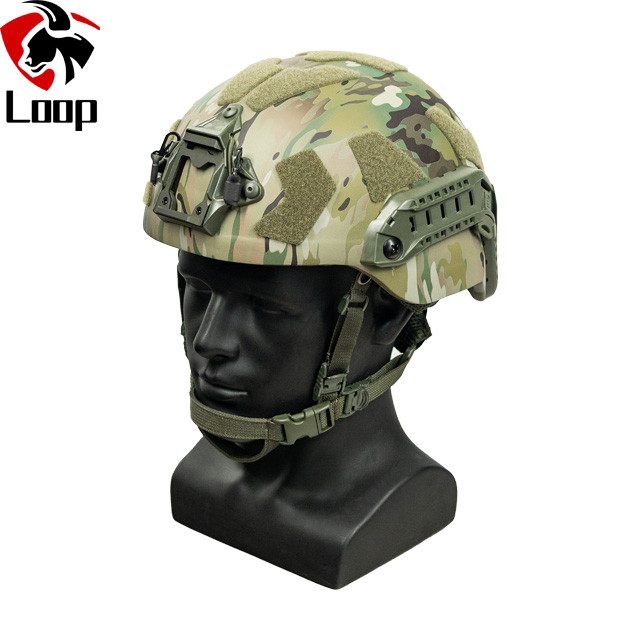
Weight savings define the primary advantage of polyethylene armor. A lightweight tactical helmet made from UHMWPE weighs significantly less than legacy materials. Standard aramid helmets often exceed three pounds for a large shell. A comparable polyethylene shell routinely weighs under two and a half pounds. This 20 to 30 percent reduction changes operational dynamics entirely. You feel the difference immediately when clearing rooms or scanning sectors. Operators move their heads faster and more naturally. Cervical spine fatigue drops dramatically during 12-hour missions. You can mount heavy night vision devices without requiring massive lead counterweights on the rear of the helmet. The overall strain on the neck muscles decreases, preventing long-term orthopedic injuries that frequently force experienced operators into early medical retirement.
Polyethylene possesses inherent hydrophobic properties. It repels water at a molecular level. The material retains full ballistic efficacy when fully submerged. Aramid fibers, by contrast, absorb water if their protective outer coatings fail. Wet aramid loses significant ballistic stopping power and structural rigidity. Polyethylene requires no such protective paints or epoxy coatings to remain waterproof. It also resists ultraviolet radiation effectively. Saltwater exposure does not degrade the internal fiber structure. Common solvents, DEET bug spray, and cleaning chemicals leave the shell undamaged. This resilience reduces the risk of environmental degradation during harsh deployments. The helmet maintains its structural integrity and ballistic rating throughout its entire service life, regardless of the weather conditions.
UHMWPE exhibits natural positive buoyancy. The raw material floats in water. This characteristic proves critical for specific mission sets. Visit, Board, Search, and Seizure (VBSS) teams require buoyant gear when climbing caving ladders on the sides of hostile vessels. Amphibious operations carry inherent drowning risks. Coast guard units deploy in unpredictable maritime environments where falling overboard is a constant threat. Heavy aramid helmets act as anchors if an operator hits the water. A polyethylene shell provides slight flotation assistance. It reduces the overall negative buoyancy of the operator's combat kit. This simple material property drastically improves water survival odds during tactical deployments.
The National Institute of Justice establishes baseline armor standards for domestic and international agencies. A true NIJ IIIA helmet stops specific high-velocity handgun threats. The testing protocol requires defeating .357 SIG flat nose rounds traveling at 1,470 feet per second. It also requires stopping .44 Magnum semi-jacketed hollow points at 1,430 feet per second. These rounds strike the helmet with massive kinetic energy. Procurement officers must understand testing terminology to avoid substandard gear. "Tested to NIJ Standards" simply means a lab fired rounds at the helmet once. It does not guarantee consistent quality control across production batches. "NIJ Certified" implies rigorous, ongoing compliance and facility inspections. Always approach procurement with skepticism. Demand independent laboratory reports for every helmet batch you purchase.
Handgun protection only covers part of the threat matrix. Shrapnel poses a higher statistical threat in conventional combat environments. A reliable military helmet must defeat high-velocity fragments from artillery, grenades, and improvised explosive devices. NATO established the STANAG 2920 standard for this exact purpose. Independent laboratories conduct V50 ballistic limit testing. They fire 17-grain fragment simulating projectiles (FSP) at the shell at increasing speeds. The V50 represents the exact velocity where 50 percent of the projectiles penetrate the shell and 50 percent are stopped. Polyethylene excels in these metrics. It routinely achieves V50 velocities exceeding 650 meters per second (roughly 2,132 feet per second). This high fragmentation resistance protects operators from lethal spall and blast debris.
Stopping the bullet solves only half the problem. When a projectile strikes the helmet, the shell deforms inward upon impact. This inward bulge is the backface signature (BFS). Excessive deformation causes lethal blunt force trauma to the skull, even if the bullet never penetrates the material. Polyethylene presents unique engineering challenges here. It tends to deform more than rigid aramid under extreme impact. A premium UHMWPE ballistic helmet solves this through advanced construction techniques. Manufacturers utilize proprietary resin matrices to stiffen the shell during the pressing phase. They also integrate specialized internal padding systems. High-density EPP and EVA foams absorb the blunt impact energy before it transfers to the skull. This combination of rigid resins and impact foam keeps the backface deformation within survivable limits.
Conventional infantry units rapidly adopt polyethylene headgear to modernize their forces. The modern digital soldier carries extensive electronic equipment. Weight reduction becomes a primary logistical objective for command staff. A military tactical helmet must integrate seamlessly with this gear. Polyethylene shells accommodate active hearing protection easily. They allow clearance for complex communications headsets and boom microphones. Mechanized units benefit from the reduced bulk inside cramped vehicles like Strykers and Bradleys, where operators frequently hit their heads against steel bulkheads. The lighter weight allows infantrymen to sustain high-tempo operations longer. Fatigue reduction directly correlates to improved marksmanship, faster reaction times, and better decision-making under fire.
Special operations forces require specialized equipment profiles tailored for direct action. The Future Assault Shell Technology defines modern high-speed headgear. A fast helmet features a distinct high-cut profile. It removes the ear coverage entirely. This exposes the sides of the head. Operators gain unobstructed situational awareness and directional hearing. They easily mount large, over-the-ear communication systems directly to the helmet rails. Tier 1 and Tier 2 units prioritize this modularity above all else. The combination of the high-cut design and lightweight polyethylene material creates the ultimate assault helmet. It maximizes speed, flexibility, and electronic integration during nighttime raids.
Domestic tactical teams face different operational realities than military units. A law enforcement helmet often sits in a patrol vehicle trunk for months at a time. It endures extreme temperature fluctuations. Summer heat inside a trunk can exceed 130 degrees Fahrenheit, while winter freezing stresses the materials. Polyethylene handles these standby storage conditions exceptionally well without degrading. SWAT units require rapid deployment readiness. When a crisis occurs, officers don their gear instantly. The lighter weight helps patrol officers who are not accustomed to wearing heavy armor daily. Riot control units also benefit from the reduced neck strain during prolonged civil disturbance deployments, where they may stand on a line for ten hours straight.
Selecting the right material requires understanding specific compromises. Neither material performs perfectly in every single category. You must weigh the operational environment against material properties to make an informed procurement decision.
Feature | UHMWPE | Aramid (Kevlar/Twaron) |
|---|---|---|
Weight | 20-30% lighter, significantly reducing fatigue. | Heavier, increasing cervical spine strain over time. |
Shell Thickness | Slightly thicker to achieve IIIA rating. | Thinner profile, closer fit to the skull. |
Water Resistance | Inherently hydrophobic; retains 100% performance wet. | Absorbs water; requires intact protective coatings. |
Thermal Resistance | Lower melting point (~130°C). Vulnerable to extreme heat. | High heat resistance (~500°C). Ideal for fire/EOD. |
Buoyancy | Positively buoyant (floats). | Negatively buoyant (sinks). |
Polyethylene achieves its weight savings through volume. The material is lighter, but you need more layers of it to stop a bullet. A UHMWPE shell is often slightly thicker than an aramid equivalent. Both achieve the exact same ballistic rating, but the physical profile differs. This thickness affects external dimensions. Helmet covers must accommodate the larger outer circumference. Sizing charts differ slightly between materials, meaning an operator who wears a medium aramid helmet might need a large polyethylene helmet. Accessory mounting requires longer hardware in some cases. You must account for this increased thickness when configuring night vision mounts, side rails, and infrared strobes.
Every synthetic material possesses a thermal limit. Polyethylene melts at a lower temperature than aramid. The melting point sits around 130 degrees Celsius (266 degrees Fahrenheit). Aramid withstands temperatures exceeding 500 degrees Celsius. This difference matters in specific tactical environments. Explosive ordnance disposal (EOD) teams face extreme heat threats from fireballs. Close-proximity fire environments degrade polyethylene rapidly. Breachers working with heavy thermal cutting tools risk melting their headgear from flying slag. For these specific high-heat threat profiles, aramid remains the superior choice. For standard ballistic threats and conventional infantry work, the thermal limit rarely poses an operational issue.
Procuring advanced armor requires evaluating long-term operational value. Polyethylene manufacturing consumes massive amounts of energy. The complex consolidation process requires specialized hydraulic presses. You must evaluate this against the long-term benefits to the force. Reduced weight lowers medical liabilities significantly. Operators suffer fewer neck and spine injuries over their careers, keeping experienced personnel deployable. The environmental resilience extends the usable service life of the gear. You replace helmets less frequently due to water damage, UV degradation, or chipped paint. Increased operator efficiency during critical incidents justifies the initial resource allocation for premium polyethylene headgear.
You cannot modify a polyethylene shell easily after manufacturing. Drilling holes into a finished helmet compromises its structural integrity entirely. The drill bit tears the unidirectional fibers and generates localized heat. This causes severe delamination between the pressed layers. The helmet loses its ballistic rating immediately around the drilled area. You must purchase helmets with factory-integrated hardware. Ensure the manufacturer installs the NVG shrouds and ARC rails during the initial build process using proper backing plates. Never attempt aftermarket drilling or structural modifications on a polyethylene shell under any circumstances.
Sourcing reliable armor demands strict verification protocols. A legitimate ballistic helmet supplier provides transparent documentation upon request. Demand independent, ISO 17025 certified laboratory test reports. Review the V50 fragmentation data carefully to ensure it meets STANAG requirements. Scrutinize the NIJ IIIA backface deformation results to verify blunt trauma mitigation. Ensure the supplier conducts consistent lot testing. Every production batch must undergo sample destruction testing to verify the resin matrix cured properly. Verify their liability insurance coverage. Reputable suppliers stand behind their products with comprehensive legal and financial backing, proving they trust their own manufacturing process.
A ballistic shell provides zero protection if it falls off during a blast or a vehicle rollover. The harness system dictates actual survivability. Evaluate the retention system meticulously. BOA-style dial closures provide micro-adjustments for a secure, wobble-free fit. Impact-absorbing pad configurations mitigate blunt force trauma. Look for dual-density foams like EPP and EVA that do not harden in cold weather. A competent tactical helmet manufacturer integrates mil-spec ARC rails directly into the shell geometry. They install rigid, lightweight NVG shrouds made from aerospace aluminum. The entire accessory ecosystem must lock together without rattling or shifting under the load of heavy night vision goggles.
Proper maintenance ensures long-term reliability in the field. Inspect polyethylene shells regularly for surface damage. Look for deep gouges that expose internal white fibers. Check the edges around the rubber trim for signs of delamination or separation. The shell outlasts the internal components easily. Establish routine maintenance protocols for the hardware. Replace suspension straps when they fray or lose their elasticity. Swap out internal impact pads every two years. Foam degrades from sweat, hair oils, and constant compression over time. Fresh pads guarantee optimal blunt impact protection and maintain operator comfort during long deployments.
Outfitting an entire department presents logistical challenges. Sizing inconsistencies plague large orders if the manufacturer lacks strict quality control. Operators have different head shapes, requiring various pad thicknesses. Aftermarket accessory compatibility varies between batches if rail tolerances shift. Supply chain reliability determines deployment schedules. Mitigate these risks through structured testing. Request Test and Evaluation (T&E) samples before committing to a fleet-wide purchase. Issue these samples to your most critical operators and firearms instructors. Gather their feedback on comfort, weight, and accessory integration. Base your final procurement decision on their field data rather than a spec sheet.
Audit your current headgear inventory to identify heavy, outdated aramid helmets causing operator fatigue and neck strain.
Request unredacted V50 and NIJ IIIA independent laboratory test reports from prospective suppliers before issuing purchase orders.
Initiate a Test and Evaluation (T&E) program with a small batch of UHMWPE helmets to verify accessory compatibility with your current night vision and comms setups.
Establish a strict replacement schedule for internal suspension pads and retention harnesses to maintain blunt impact protection.
A: Manufacturers typically provide a 5-to-7-year warranty on the ballistic shell. The inherent environmental resistance of polyethylene often allows the shell to outlast this period. However, the retention hardware, straps, and internal impact pads degrade faster from sweat and friction. You must replace these internal components every two to three years.
A: Standard UHMWPE helmets carry an NIJ IIIA rating, designed to stop handguns and fragmentation. They do not stop high-velocity rifle rounds. Defeating rifle threats requires specialized, ultra-thick shells or heavy applique armor attachments, which significantly increase the overall weight.
A: A polyethylene shell provides a standard weight savings of 20 to 30 percent compared to a traditional Kevlar shell of the same cut and size. This reduction drastically minimizes neck strain and fatigue during extended tactical operations.
A: The manufacturing process dictates the cost. Consolidating unidirectional polyethylene layers requires extreme heat and immense hydraulic pressure over extended periods. This energy-intensive process, combined with the cost of raw ultra-high-molecular-weight materials, drives up the initial production expenses.
A: The NIJ IIIA standard indicates the helmet defeats specific high-velocity handgun threats. The testing matrix requires stopping .44 Magnum and .357 SIG rounds. It also ensures the helmet limits backface deformation to prevent lethal blunt force trauma to the skull.
A: Yes. Polyethylene is inherently hydrophobic at a molecular level. It repels water naturally and retains 100 percent of its ballistic integrity when fully submerged. This provides a distinct advantage in maritime environments compared to aramid, which absorbs water if damaged.
A: You must request full, unredacted test reports directly from the manufacturer. Ensure the testing was conducted by an independent, ISO 17025 certified ballistic laboratory. Verify that the reports include both V50 fragmentation data and NIJ IIIA backface deformation metrics.


